‘I’m still here, but yet I’m gone…’*

At Leslie’s birthday celebration, one conversation centered on movies that induce tears. Granddaughter Samantha, a real ham when she wants to be, told us about a “romantic comedy” she’d seen that had a horrific ending.  She was indignant. She sobbed. When Leslie’s friend Kenna added her observations and her tears to the story, the rest of us howled.  I seldom cry, and “Lassie come home” and “The Fighting Sullivans” are the only movies that moved me to tears, ever.

Screen Shot 2015-10-23 at 3.02.42 PM“I’ll be me” is the 2014 film about country singer Glen Campbell and his Alzheimer’s-inspired farewell tour. It has been in theaters, but I found it on Netflix.

I watched it secretly. I didn’t want Peter to watch me watching it, even though I don’t think he would recognize himself in Campbell. I’ve slowly come around to admitting to myself that my husband has Alzheimer’s, though I say “dementia” to him if he questions why he can’t remember things. Dementia is an umbrella, Alzheimer’s, a hurricane that turns the umbrella inside out.

When Campbell was diagnosed in 2011, he chose, with wife Kim’s encouragement, to have his farewell tour filmed. He wanted people to know he had the disease, but could still sing and play guitar. “Hell, I’m not done yet,” he said.

A camera was there to follow him as his brain was scanned using the newest and most definitive diagnostic techniques. The camera was in the doctor’s office when he and Kim heard the dreaded words: “Highly probable that you have Alzheimer’s Disease.” Cameras followed him on his final tour that was to be three to five weeks, but turned into 151 performances worldwide. As long as the singer could keep going without too many hiccups his wife, children, and musicians thought he should continue doing what he loved.

My husband can’t sing, though he thinks he can, and he doesn’t have an entourage to bolster him. But his sense of humor — wacky, corny — is like Campbell’s.  Peter is handling his downward spiral the way Campbell does: hiding behind stoicism, silliness, and wild excuses. Bluffing, in other words.

Campbell is 78, a year older than Peter. The singer can no longer put words together intelligibly — aphasia — though he still plays his guitar. Peter has a hard time finding words and seldom says much, especially in a group. He’s never been a talker, so his lack of conversation is nothing new to those of us who know him.

The film was a Bandaid to my soul. Seeing that Campbell continues to clown around the way he always has, using goofiness to camouflage his fading memory, was like watching my husband. Peter’s clowning not only saves us — it’s impossible not to laugh — but it lets him think he’s fooling me and anyone else who’s around. Occasionally, a look crosses his face that says, I know I’m being silly, but it’s all I have left.

Some of Kim Campbell’s asides resonate. In two scenes, there are shots of the singer holding up plates and licking them clean. In a cutaway, she says, “I get so mad at him when he does that…I tell him it’s bad manners…I go into the pantry with my plate and sit on a stool to eat.” Later, she says tearfully, “I know he can’t help it, but I don’t like to see him that way.” Her words helped me feel better about my own reactions to  my daily triggers.

The singer now calls his wife of 32 years Mrs. Campbell. Her laugh is sad.

“I guess my message to caregivers is, stop to look on the bright side …. Make the best of a bad situation.…” When asked about the message, she said, “This film is funny…uplifting. Yes, it deals with Alzheimer’s, but it’s not a downer…not depressing. You learn a lot and it’s very educational. … We want people to know that it’s just full of laughter. Because people might go ‘Oh, it’s about Alzheimer’s. I don’t want to go see this film.'”

“I’ll be me” is funny, yes, but I confess, it’s now on my list of movies that make me cry. It is a must-see.

Screen Shot 2015-10-23 at 2.54.27 PM

*First line of “I’m not gonna miss you,” the last song Glen Campbell recorded.
Songwriters: Julian Raymond and Glen Campbell.
Lyrics © Warner/Chappell Music, Inc., BMG Rights Management US, LLC
“I’ll be me” directed by James Keach; produced by Trevor Albert and James Keach


2016 National Society of Newspaper Columnists’ contest finalist. 



Why ask, ‘What if?’

Thirty-five years ago — April 1980 — Peter, who hadn’t yet to been persuaded to marry me, participated in a bike race in Norfolk, Virginia. It was raining lightly and roads were slick. He slid out on a curve and crashed, hitting his head. Not many riders wore helmets back then, though nearly all wore rigid leather “skid lids” that offered little protection except to the scalp. A doctor on the scene diagnosed a concussion, but after resting a bit, Peter drove the three hours home.

I was at a social do elsewhere, one that I’d begged Peter to attend with me. He’d refused. I was upset that his devotion to biking took precedence over his devotion to me.

Forward to about seven years ago and Peter’s initial diagnosis by a neurologist. She said his increasing symptoms “could be” early Alzheimer’s, while an in depth study in 2011 at the Psychological Services and Adult Assessment Center suggested Vascular Dementia, likely caused by the concussion in 1980.

What if I’d insisted he go with me on that April day? What if I’d been at the race with him and had insisted he stay in the hospital overnight? But what if Peter’s dementia is genetic? His grandfather had some form of dementia, and his father had Parkinson’s disease and dementia in his later years.

No matter what the diagnosis, the symptoms and the outcome are the same. There is still no definitive way to diagnose Alzheimer’s until post-mortem. And there is still no cure.

images-1So, my husband who once rode several thousand miles a year for fun, can no longer ride at all because 1.) his balance is shot, and 2.) he’s afraid he’d get lost if he were try a ride. His two custom bikes still live in our basement, and the “clunker” he used to ride around town gathers dust in the shed. I’ve suggested we ride together on our local trail, but he won’t. Although I wasn’t a bad cyclist myself, I was never in his class and he didn’t like to “watch the grass grow” when he rode with me. I’d looked forward to our golden years when he might not mind going at my pace. Not gonna happen.

A friend called recently to catch up. “How’s Peter doing?” he asked. I gave him the short story, then he wanted to know if Peter still biked. When I said no and told him why, he interrupted. “What about a tandem?”

I roared. The thought of Peter allowing me to ride in front while he rode stoker was, well, the laugh I look for every day.

Screen Shot 2015-09-22 at 5.18.02 PM

Header photo: Bikes parked in a commuter lot, Amsterdam, 2007.

2016 National Society of Newspaper Columnists’ contest finalist. 

Rock and a hard place.

I scan the web often for caregiver tips that might help me help my husband…or help me help myself. These five points, about talking with an Alzheimer’s patient, are so important:

  1. Diminish distractions, banish background noises.
  2. Converse one-on-one because more people equals more confusion.
  3. Keep things simple, stick to short specific statements.
  4. Avoid arguments because no one will win.
  5. Just keep talking even if they can no longer respond.

Number four is my bugaboo. I always try to prove my point, establish that I’m right, or explain when no amount of explaining will make any difference. Peter and I both are argumentative, always have been. Even now when everything in our lives has turned upside down, that need be right still rises to the top like pasta on the boil.

I’ve long since learned that numbers one through three are the best ways to interact with him,  but I figured that out while trying to understand more about his place on the autism spectrum (ASD). It has always been difficult for me to have any meaningful conversation with Peter, so to keep him focused, I try to pick the right time to have a conversation (1), and I know from experience that he zones out if several people are talking (2), plus I attempt to keep to one idea at a time (3). Peter has never been one to chat, so I’m used to talking without response (5).

It has always been way more difficult for me to deal with his ASD than with his dementia, even though he can’t help either condition. I battle with myself daily. He can’t help it, he-can’t-help-it, he-can’t-help-it.

There has been some research that has shown that people with ASD might be more predisposed to some form of dementia than the general population. I’ve wondered about that for years. If science proves there is a link, at least I could argue that I was right.

Screen Shot 2015-09-08 at 10.12.51 AM

Header: Lake Louise, BC.  Peter tries to lift a rock to bring home for Carolynn’s collection. (8/31/10)

2016 National Society of Newspaper Columnists’ contest finalist. 

Attention span of a goldfish.

Screen Shot 2015-08-19 at 3.16.32 PM

Ten symptoms of caregiver stress were listed in an Alzheimer’s Association newsletter with this caveat: Alzheimer’s caregivers frequently experience high levels of stress. It can be overwhelming to take care of a loved one with Alzheimer’s or other dementia, but too much stress can be harmful to both of you.

 No kidding!

Screen Shot 2015-08-19 at 3.14.18 PM

In any given day I deal with several of these, and I’m sure other caregivers do the same:

  1. Denial – Early on, I was convinced that if I kept trying to force Peter to remember things, to eat right, to get out more he’d at least maintain his status quo.
  2. Anger – Screams, like geysers ready to erupt, lurk just below the surface of my “looking for laughs” demeanor. 
  3. Social withdrawal – Sometimes it takes too much effort do anything at all, much less be sociable.
  4. Anxiety – I’ve finally done what I should have done sooner: hired more help for Peter and for me. What a difference to have the house cleaned and tidied by a young lady who is energy personified, the garden maintained by a woman who knows first-hand what it’s like to be a caregiver, niggling tasks done by a handyman friend.
  5. Depression – Big mistake to think that I didn’t need anti-depressants. Hindsight and a meltdown proved me wrong.
  6. Exhaustion – I used to keep my house to a certain standard, not the same white-glove-test standard my mother used, but I kept the dust bunnies at bay, food in the fridge, cookie tin filled, laundry done. When I realized it had been weeks since I’d cleaned the bathroom or changed our sheets, I knew I needed more help. (see #4)
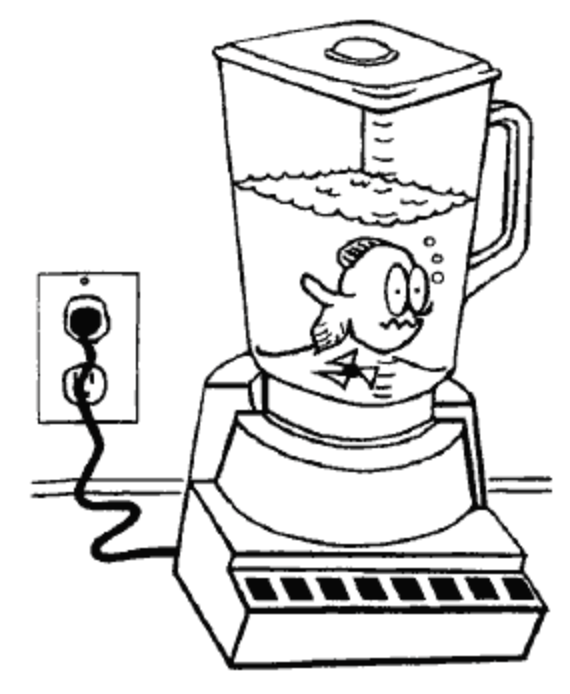
  7. Sleeplessness – Guilt wakes me in the wee hours, especially when I’ve crabbed at him for things he can’t help. Peter’s attention span is worse than a goldfish’s and he’ll ask the silliest things over and over. Within a few seconds he forgets I yelled and when I apologize he doesn’t know why.
  8. Irritability – No one has ever called me patient. Lately Peter has started reorganizing the pantry every few days, lining up jars and moving boxes so I can’t find anything. Most wives would be thrilled if their husbands undertook that task, but I’m an angry bumble bee.
  9. Lack of concentration  – I used to be so organized, so tidy, but no more. My personal spaces are in the same sorry state as my mind.
  10. Health problems – Many times I wonder if his dementia has rubbed off on me. Am I losing control too? Is it stress, or am I destined to be a statistic as well?
    I talked to my doctor. He did the basic tests and I passed. “Stress,” he said, “it’s stress. You’re doing fine, but take time for yourself, do what you can to alleviate stress.”

My mother always said, no matter how bad things may seem, there’s always someone who is worse off than you. I’m glad I’m not a goldfish.


Screen Shot 2015-08-19 at 3.24.59 PM

2016 National Society of Newspaper Columnists’ contest finalist. 


Laughter, always the best medicine.

This caregiving business is a series of lessons on the run. I have an “ah ha” moment almost every day.

Take today.

Every morning, I put our prescription meds into two shot glasses — Peter’s on the left of the coffeemaker, mine on the right. He takes an 81 mg aspirin, Losarten for blood pressure, Wellbutrin for mood, Livolo for cholesterol, and Vitamin D3 because dementia patients are thought to be lacking in the D vitamin. Oh, and Namenda, the well advertised medicScreen Shot 2015-08-09 at 5.49.32 PMation thought to slow the effects of dementia-related diseases. How could I forget that one?

After dinner, I dole out Glucophage, the supposed answer to leveling his blood sugar levels since he won’t leave sweets and carbs alone no matter how often the doctor explains nor how often I nag. Just before bed, he takes Donepezil (Aricept), to treat confusion, possibly improve memory, awareness and the ability to function.

How well do these meds, particularly Nameda and Donepezil, perform? I have no idea. I do know that his taking pills from the wrong shot glass was an important lesson-in-waiting for me this morning.

I discovered the mistake when I poured my second cup of coffee. Peter was already watching West Ham beat Arsenal. “You haven’t taken your pills yet, Peter. No, wait! Mine are gone and I never take them until after my coffee!”

He had no idea what I was talking about. So much for awareness.

“Did you take my pills?” I asked, showing him the little empty glass. “Yes, you took mine.” I answered my own question.

“I don’t know…probably,” he said. “What will happen to me?”

“Hm, well, my super prescription vitamin may give you a boost. Maybe you’ll have the energy to mow the grass…” I laughed at my own joke as he made a face that said, “Not bloody likely…I’m watching soccer.”

I didn’t expect that he’d cut the grass, and he didn’t. But, lesson learned, from now on I’ll keep my medications in a secure container in my pocket.

Screen Shot 2015-08-09 at 9.25.15 PM

Ah ha! A beer-on-a-stick might work.

Header photo: Morning glories keep their eyes on Peter.

2016 National Society of Newspaper Columnists’ contest finalist. 


Is someone here?

My longtime friend Bonnie and her husband Paul visited us for a couple of days last week. They were on their way from Florida to his high school reunion in Ohio.

Bonnie had emailed several times the weeks before. She wanted to make sure it was OK for them to stay with us. “Will it upset Peter?” she wondered. “Please tell us. We understand completely. We could get a hotel room.”

I reassured her that Peter remembered they were coming, though he wasn’t sure he remembered them. They were here two years ago and he’d met them at several of our class reunions, but as he says, he can’t remember what he had for breakfast.

During the days leading up to their visit Peter was extra helpful. We’d had workmen here for a week fixing our sagging carport. Sawdust and grime had drifted into the house, crusting everything. I vacuumed and dusted while Peter scrubbed the bathtub and tidied the flower beds. He mowed the yard almost willingly.

They arrived on time, well, a minute late actually. She texted an hour earlier that their GPS said they’d arrive at 12:11. They rolled in at 12:12. But what’s a minute between old friends?

It was a pleasant, sunny day, so we ate lunch on the terrace. Then Bonnie and I chattered and reminisced the whole afternoon like two women of a certain age who have known each other for all but the first two years of their lives. Paul chimed in now and then because he knew some of the people we talked about, and Peter listened, smiling. We carried on through dinner and sat outside until the lightning bugs’ glow wasn’t bright enough for us to clear the table.

Back inside, Bonnie pulled out the eight millimeter movie film she’d brought along. She had never seen it, but she’d checked beforehand to make sure I still had my dad’s old projector. The film showed her learning to walk and on through Christmases and birthdays to the age of six or seven.

Peter laughed at us laughing with tears in our eyes.

The next morning I was having my second cup of coffee when Peter came downstairs. He looked puzzled. “What’s going on upstairs?” he asked. “Is someone in the bathroom?”

I chuckled. “Well, it’s either Bonnie or Paul,” I said.

He was still confused.

“Bonnie and Paul…they got here yesterday!” No matter how enjoyable the day and evening had been, he could not remember that we had overnight guests.

He slathered his usual two slices of toast with Keillor & Sons orange marmalade, poured coffee into his big green mug, and sat down to read the paper. He reads the paper again every afternoon because he forgets the news he’s read hours earlier. And he truly can’t remember what he has for breakfast, even though he has the same thing day after day after day.

DSC01065

Gold Coreopsis brightens shady spots, while Black-Eyed Susan vine (at top) seems to glow in the dark.

Header photo: climbing Susans.

2016 National Society of Newspaper Columnists’ contest finalist. 


Celebrate ‘Poppy’s hope!’

The Parade magazine in today’s newspaper features a cover that shouts: People Power: how caregivers and advocates are piecing together a better world for people with Alzheimer’s.

DSC09461

Poppy hopes.

Yesterday I posted about the Alzheimer’s Association’s fund raising event, The Longest Day™,  that’s taking place today. Though a small effort among the hundreds of teams and tens of thousands of dollars that will be raised, Carolynn’s “Poppy’s Hope” challenge has now reached a very respectable one thousand dollars.


Screen shot 2015-06-20 at 10.30.20 AM


DSC09331

The art of losing isn’t hard to master;
so many things seem filled with the intent
to be lost that their loss is no disaster.

Lose something every day. Accept the fluster
of lost door keys, the hour badly spent,
the art of losing isn’t hard to master.
Elizabeth Bishop (1911-1979) Geography III [1976]. One Art.


DSC01013_2

Even memory is not necessary for love. There is a land of the living and a land of the dead and the bridge is love, the only survival, the only meaning.
— Thornton Wilder (1897-1975) The Bridge of San Luis Rey [1927], last lines.


DSC01003

It’s a poor sort of memory that only works backwards,” the Queen remarked.
— Lewis Carroll (1832-1898) Alice’s Adventures in Wonderland [1868].


Do not dwell in the past, do not dream of the future, concentrate the mind on the present moment.
— Buddha.


DSC01061

We don’t know how strong we are until being strong is the only choice we have.
— Alzheimer’s Disease Awareness.


Photos: Our gardens at their best.

2016 National Society of Newspaper Columnists’ contest finalist. 

There’s always hope.

The Longest Day™ is a team event to raise funds and awareness for the Alzheimer’s Association. Held annually on the summer solstice, [June 21, 2015] the duration of this sunrise-to-sunset event symbolizes the challenging journey of those living with the disease and their caregivers. Carolynn Lyman of the Cancer Program is leading the ‘Poppy’s Hope’ team.
— Announcement in Faxton-St.Lukes Hospital newsletter, Utica, NY

I’d planned to organize an event for The Longest Day ™ this year, which coincidentally, is Father’s Day…tomorrow. But a couple of nasty bugbears, Stress and Anxiety, got in my way and totally discombobulated me for a time. It’s been said that the caregiver’s days are 36-hours long, and I believe it, even though Peter and I are “lucky” because he’s not in as bad a shape as some are…yet.

11160623_10205473130926745_8702219380988922005_o_3

‘Poppy,’ Carolynn, me, May 2015.

Carolynn picked up on the thread I’d dropped and started “Poppy’s Hope.” As it turned out, she didn’t have time to organize the golf tournament she’d dreamed up, so she went for a simple Facebook announcement and got a write-up in the hospital newsletter where she’s the Radiation Oncology Charge Nurse.  Though only up for a short time, her site has raised more than 535 dollars.

Screen shot 2015-01-20 at 4.22.16 PM

Purple streak.

Then, Leslie got in on the act too by posting a photo and a plea — “Wear purple for Peter” — to her Facebook page. I’m not an enthusiastic Facebooker, but I changed my profile and header photos to show the purple streak in my hair and my purple sage. Purple is the Alzheimer Association’s color.

Screen shot 2015-06-19 at 1.46.40 PM

Martin, left, Peter, me, Leslie, April 2014.


Every day is the longest day for Dementia sufferers. 
In the inaugeral year, 2012, The Longest Day™ events raised 236 thousand dollars and attracted more than 635 partcipants on 200 teams. Now in its third year, teams are as varied as the participants. Activities range widely, from playing contract bridge, quilting, and gardening, to golf, volleyball, walking, cycling, dancing, and fishing, to name a few.

Yesterday, I received a thank-you letter for the check I sent to the Alzheimer’s Association in lieu of organizing a team activity as I’d intended. A paragraph at the bottom reminded me of something I already knew: Alzheimer’s is the sixth leading cause of death in America and the only one among the top ten that can’t be prevented, cured or even slowed significantly. In Virginia alone, 130 thousand people, aged 65 and older have the disease. Worldwide, the number of Alzheimer’s and related dementia sufferers is a staggering 44 million!

Screen shot 2015-06-20 at 10.30.20 AM

The desire of sage is to render man immortal, according to a late medieval treatise. The sage plant has been praised highly throughout history for its power of longevity. Sage, L. salvia,  means to be in good health, to cure, to save.

If I thought it would help, I’d roll Peter in sage, sprinkle it on his pillow, and rub it behind his ears!

11165067_1122051104475978_1668361203311054294_o

My sage is a huge plant that I moved to Virginia from our garden in upstate New York 17 years ago.

Header photo: Clematis climbs the light post.

2016 National Society of Newspaper Columnists’ contest finalist. 
A life sentence.

Periodically, our long term insurance company arranges for a nurse to come assess my husband — they want to  make sure he still has dementia, I guess. Today was the day. We were lucky to have Caroline again. Peter clicked with her before and again today.

The questions she asks are almost exactly the same as those his neurologist asks, and we were at her office yesterday. They want to know if he has any physical limitations, dizzy spells, or loss of strength, and if he can do household chores or handle bill-paying.

No, no, no, no, and no.

The hardest questions for most dementia patients are: can you name the day of the week, the month, the year, the season?

No, no, no, and no.

“Now I’ll ask you to remember three words,” Caroline said. Peter groaned and she smiled, but went on. “You’ll get one point for repeating the words correctly right away, and then again after you’ve either counted backwards from one hundred by sevens, or spelled the word “world” backwards. OK?” Peter nodded. “Your words are table, book, tree.”

“Table. Book. Tree,” he said. One point.

“Now, would you rather count backwards by sevens or spell “world” backwards?” she asked.

No hestitation. “D-L-R-O-W.”

“Great!” Caroline said. “Now, the very last part.” She handed him her clipboard and asked him to copy the multi-sided figures shown. After that she asked him to write a simple sentence.

“Sentence about what?” Peter asked.

“Anything at all,” she said. “A short sentence, but it has to make sense.”

Peter quickly copied the three figures, and after thinking a few seconds he wrote a sentence.

She looked at the clipboard. “Oh-h, that’s so sweet,” she said. She showed me his sentence: “I still LOVE my wife.”

Even though he didn’t score as well as he did the last time she was here, my unsentimental, undemonstrative husband got an A+ from me.

DSC09436

Header photo: Swans at Middle Gardens, Charleston, SC, May, 2009.

2016 National Society of Newspaper Columnists’ contest finalist. 


Have I done him wrong?

This sentence from an Alzheimer’s Association website article jumped right off the screen at me:

Most people living with Alzheimer’s Disease are not aware of their diagnosis.

What?

“Despite…the benefits of clear and accurate disclosure,” the article continued, “[only about 45 percent] of seniors diagnosed with Alzheimer’s…[have been] told the diagnosis by their health care provider.” And their caregivers don’t know either. On the other hand, more than 90 percent…of cancer and cardiovascular patients do know their diagnoses.

Whoa-a!

There is still only one way to diagnose Alzheimer’s definitively and that’s through brain autopsy. If the person exhibited Alzheimer-like symptoms while alive and the brain tissue contains the microscopic physical abnormalities typical of the disease, a definitive diagnoses can be made.

Physicians can correctly diagnose Alzheimer’s disease about 90 percent of the time while the patient is alive, based on mental and behavioral symptoms, physical examinations, neuropsychological tests, and lab tests.

But there’s still no cure.

Screen shot 2015-05-18 at 8.25.49 AM

Every 67 seconds, someone in the US develops Alzheimer’s.

Peter’s neurologist diagnosed his dementia about seven years ago. She didn’t use the “A” word, rather she said simply, “Dementia.” I breathed a sigh of relief, and when we got into the car to come home, I started crying. Peter wondered why.

“Because you don’t have Alzheimer’s,” I said, “it’s ‘only’ dementia.”

“Is that good?” he asked.

“Well, no, but it’s better than Alzheimer’s,” I said.

Screen shot 2015-05-18 at 8.25.38 AM

By 2050, there could be as many as 16 million people with Alzheimer’s.

He asked no further questions then or since. Every now and then he’ll say his memory is getting worse, so I remind him it won’t get better. I’ve never used the dreaded “A” word, but I wonder if I should? Deep down, does he know?

Have I done my husband a disservice by not laying it out? Should I attempt to do it now? If he already knows or suspects, he would never say anything. That’s not his style. He’s always played things close to his chest.

Screen shot 2015-05-18 at 8.25.28 AM

More than 5 million Americans have Alzheimer’s.

Experts advise telling patients and families because
of the need to:

  • Plan for the future
  • Take care of financial and legal matters
  • Address potential safety issues
  • Learn about possible future living arrangements
  • Develop support networks

Been there, done all that, without having The Conversation. Have I done him wrong, to paraphrase a line from an old Mae West movie? I don’t know.

Screen shot 2015-05-20 at 5.30.52 PM

I really had to look hard for something to fulfill my laugh-a-day pledge. This one works for me. Hope it does for you.

The doctor says to his patient, “I have good news and bad news.”
‘Tell me the bad news first, Doc.” 
“You have Alzheimer’s disease.”
“Oh no! What’s the good news?”
“You can go home and forget about it.”


Graphics Alzheimer’s Organization©

2016 National Society of Newspaper Columnists’ contest finalist.