Lefty’s is all right.

Our favorite restaurant, Lefty’s, recently moved to another location further along Main Street. I was eager to see it, and to eat there. The food is always good.

images-1When our friends Jerry and Shelia visited last week, I suggested we try the new place, but the men wanted a Guinness and fish and chips so they went to Red Robin. We ladies went shopping first, then to Lefty’s. While we chatted, a favorite waiter walked by. I was impressed,  I said. “Oh, is this the first time you’ve been here? Your husband was in last week,” he said. “He was with…”

“Bill,” I said “his companion. He didn’t say they’d been here, but then he doesn’t even remember what he’s eaten when they go out, much less where.”

He chuckled. “We always like to see him. He keeps us laughing.”

“That’s Pete,” Shelia said. “He’s been like that as long as I’ve known him.”

“He’s a good customer. We don’t even mind if he doesn’t pay…”

What? He leaves without paying?” I squeaked. “You do chase him and get the money, don’t you?” (Until a few months ago, Peter walked to Lefty’s by himself occasionally so I could see how it happened without Bill or me to watch him.)

“Nah, we love him, and it doesn’t matter. Evens out anyway because a couple of times he managed to pay twice somehow.”

I thanked him for the kindnesses. Shelia and I laughed, but really, I was embarrassed! Peter gets special service when he goes to Red Robin with Bill or me and now, obviously, he gets special treatment at Lefty’s, too.

As his ol’ granny would have said, “A bit of all right, that.”

Screen shot 2015-03-29 at 2.29.51 PM

2016 National Society of Newspaper Columnists’ contest finalist. 

Random thoughts, not remembered.

Peter has trouble expressing himself more and more frequently. The other evening he was trying to explain something, but his words were jumbled. I leaned closer hoping I could catch a few words and make sense of them. Instead, he smacked himself on the head and said, “My thoughts just won’t stay in one place long enough for me to remember what I’m trying to say.”

We both laughed, but that in itself was quite a mouthful for him these days.

APHASIA (uhfey-zhuh) noun, Pathology.
The loss of a previously held ability to speak or understand
spoken or written language, due to disease or injury of the brain.

It’s so difficult for those of us whose thoughts do stay in one place to imagine what it would be like to have some form of dementia. Peter falls back on his sense of humor to get by, and I borrow on that a lot. At times, though, it’s exhausting, probably as much for him as it is for me.

Screen Shot 2015-09-22 at 2.56.34 PM

©Dan Murphy cartoon, 6/18/95

Later Peter asked, “Did you know me before my mind got like this,” he waggled his hands above his head, “before my bike accident?”

“Of course I did, silly,” I answered. “That was in 1980. We met in 1974. Besides, your mind didn’t get ‘like this’ until a few years ago. ‘”

“How do you remember all that?”

“‘Elephant brain’,” I joked. “Important stuff. How could I forget?”

“I did,” he said sadly.

Header photo: web grab

2016 National Society of Newspaper Columnists’ contest finalist. 

‘I’m still here, but yet I’m gone…’*

At Leslie’s birthday celebration, one conversation centered on movies that induce tears. Granddaughter Samantha, a real ham when she wants to be, told us about a “romantic comedy” she’d seen that had a horrific ending.  She was indignant. She sobbed. When Leslie’s friend Kenna added her observations and her tears to the story, the rest of us howled.  I seldom cry, and “Lassie come home” and “The Fighting Sullivans” are the only movies that moved me to tears, ever.

Screen Shot 2015-10-23 at 3.02.42 PM“I’ll be me” is the 2014 film about country singer Glen Campbell and his Alzheimer’s-inspired farewell tour. It has been in theaters, but I found it on Netflix.

I watched it secretly. I didn’t want Peter to watch me watching it, even though I don’t think he would recognize himself in Campbell. I’ve slowly come around to admitting to myself that my husband has Alzheimer’s, though I say “dementia” to him if he questions why he can’t remember things. Dementia is an umbrella, Alzheimer’s, a hurricane that turns the umbrella inside out.

When Campbell was diagnosed in 2011, he chose, with wife Kim’s encouragement, to have his farewell tour filmed. He wanted people to know he had the disease, but could still sing and play guitar. “Hell, I’m not done yet,” he said.

A camera was there to follow him as his brain was scanned using the newest and most definitive diagnostic techniques. The camera was in the doctor’s office when he and Kim heard the dreaded words: “Highly probable that you have Alzheimer’s Disease.” Cameras followed him on his final tour that was to be three to five weeks, but turned into 151 performances worldwide. As long as the singer could keep going without too many hiccups his wife, children, and musicians thought he should continue doing what he loved.

My husband can’t sing, though he thinks he can, and he doesn’t have an entourage to bolster him. But his sense of humor — wacky, corny — is like Campbell’s.  Peter is handling his downward spiral the way Campbell does: hiding behind stoicism, silliness, and wild excuses. Bluffing, in other words.

Campbell is 78, a year older than Peter. The singer can no longer put words together intelligibly — aphasia — though he still plays his guitar. Peter has a hard time finding words and seldom says much, especially in a group. He’s never been a talker, so his lack of conversation is nothing new to those of us who know him.

The film was a Bandaid to my soul. Seeing that Campbell continues to clown around the way he always has, using goofiness to camouflage his fading memory, was like watching my husband. Peter’s clowning not only saves us — it’s impossible not to laugh — but it lets him think he’s fooling me and anyone else who’s around. Occasionally, a look crosses his face that says, I know I’m being silly, but it’s all I have left.

Some of Kim Campbell’s asides resonate. In two scenes, there are shots of the singer holding up plates and licking them clean. In a cutaway, she says, “I get so mad at him when he does that…I tell him it’s bad manners…I go into the pantry with my plate and sit on a stool to eat.” Later, she says tearfully, “I know he can’t help it, but I don’t like to see him that way.” Her words helped me feel better about my own reactions to  my daily triggers.

The singer now calls his wife of 32 years Mrs. Campbell. Her laugh is sad.

“I guess my message to caregivers is, stop to look on the bright side …. Make the best of a bad situation.…” When asked about the message, she said, “This film is funny…uplifting. Yes, it deals with Alzheimer’s, but it’s not a downer…not depressing. You learn a lot and it’s very educational. … We want people to know that it’s just full of laughter. Because people might go ‘Oh, it’s about Alzheimer’s. I don’t want to go see this film.'”

“I’ll be me” is funny, yes, but I confess, it’s now on my list of movies that make me cry. It is a must-see.

Screen Shot 2015-10-23 at 2.54.27 PM

*First line of “I’m not gonna miss you,” the last song Glen Campbell recorded.
Songwriters: Julian Raymond and Glen Campbell.
Lyrics © Warner/Chappell Music, Inc., BMG Rights Management US, LLC
“I’ll be me” directed by James Keach; produced by Trevor Albert and James Keach


2016 National Society of Newspaper Columnists’ contest finalist. 


Why ask, ‘What if?’

Thirty-five years ago — April 1980 — Peter, who hadn’t yet to been persuaded to marry me, participated in a bike race in Norfolk, Virginia. It was raining lightly and roads were slick. He slid out on a curve and crashed, hitting his head. Not many riders wore helmets back then, though nearly all wore rigid leather “skid lids” that offered little protection except to the scalp. A doctor on the scene diagnosed a concussion, but after resting a bit, Peter drove the three hours home.

I was at a social do elsewhere, one that I’d begged Peter to attend with me. He’d refused. I was upset that his devotion to biking took precedence over his devotion to me.

Forward to about seven years ago and Peter’s initial diagnosis by a neurologist. She said his increasing symptoms “could be” early Alzheimer’s, while an in depth study in 2011 at the Psychological Services and Adult Assessment Center suggested Vascular Dementia, likely caused by the concussion in 1980.

What if I’d insisted he go with me on that April day? What if I’d been at the race with him and had insisted he stay in the hospital overnight? But what if Peter’s dementia is genetic? His grandfather had some form of dementia, and his father had Parkinson’s disease and dementia in his later years.

No matter what the diagnosis, the symptoms and the outcome are the same. There is still no definitive way to diagnose Alzheimer’s until post-mortem. And there is still no cure.

images-1So, my husband who once rode several thousand miles a year for fun, can no longer ride at all because 1.) his balance is shot, and 2.) he’s afraid he’d get lost if he were try a ride. His two custom bikes still live in our basement, and the “clunker” he used to ride around town gathers dust in the shed. I’ve suggested we ride together on our local trail, but he won’t. Although I wasn’t a bad cyclist myself, I was never in his class and he didn’t like to “watch the grass grow” when he rode with me. I’d looked forward to our golden years when he might not mind going at my pace. Not gonna happen.

A friend called recently to catch up. “How’s Peter doing?” he asked. I gave him the short story, then he wanted to know if Peter still biked. When I said no and told him why, he interrupted. “What about a tandem?”

I roared. The thought of Peter allowing me to ride in front while he rode stoker was, well, the laugh I look for every day.

Screen Shot 2015-09-22 at 5.18.02 PM

Header photo: Bikes parked in a commuter lot, Amsterdam, 2007.

2016 National Society of Newspaper Columnists’ contest finalist. 

Rock and a hard place.

I scan the web often for caregiver tips that might help me help my husband…or help me help myself. These five points, about talking with an Alzheimer’s patient, are so important:

  1. Diminish distractions, banish background noises.
  2. Converse one-on-one because more people equals more confusion.
  3. Keep things simple, stick to short specific statements.
  4. Avoid arguments because no one will win.
  5. Just keep talking even if they can no longer respond.

Number four is my bugaboo. I always try to prove my point, establish that I’m right, or explain when no amount of explaining will make any difference. Peter and I both are argumentative, always have been. Even now when everything in our lives has turned upside down, that need be right still rises to the top like pasta on the boil.

I’ve long since learned that numbers one through three are the best ways to interact with him,  but I figured that out while trying to understand more about his place on the autism spectrum (ASD). It has always been difficult for me to have any meaningful conversation with Peter, so to keep him focused, I try to pick the right time to have a conversation (1), and I know from experience that he zones out if several people are talking (2), plus I attempt to keep to one idea at a time (3). Peter has never been one to chat, so I’m used to talking without response (5).

It has always been way more difficult for me to deal with his ASD than with his dementia, even though he can’t help either condition. I battle with myself daily. He can’t help it, he-can’t-help-it, he-can’t-help-it.

There has been some research that has shown that people with ASD might be more predisposed to some form of dementia than the general population. I’ve wondered about that for years. If science proves there is a link, at least I could argue that I was right.

Screen Shot 2015-09-08 at 10.12.51 AM

Header: Lake Louise, BC.  Peter tries to lift a rock to bring home for Carolynn’s collection. (8/31/10)

2016 National Society of Newspaper Columnists’ contest finalist. 

Answer the phone already!

The home care manager with our health insurance company —  I’ll call her “K” — phones each month and asks for Peter. Since my husband will neither answer nor talk on the phone, I take her questions. Or if I’m busy, I’ll say the timing isn’t convenient. I hope she doesn’t get upset when I put her off. She sounds very sweet, and she is just doing her job.

Yesterday was different. When she called, I simply handed the phone to him. He glared at me. “Hello?” He was wary. “Oh, so far, so good,” he said, his stock answer these days when anyone asks how he is. When he answered “Six each morning,”  I knew she’d asked about his medications. “What do I take every day?” he stage-whispered to me. I was up to my elbows in sudsy water cleaning cupboards, so I yanked a drawer open and showed him the prescription bottles so he could read them off.

Next she asked about his exercise. “Yes, the dog still walks me every day, twice a day. Yes, nursing homes every week…no, oh no, not for me! Nobby visits the people who live there. No, they don’t want to see me,” he laughed.

She already knew all the particulars from talking to me, but I was glad I’d made him take the call because it forced him to talk. I constantly try to engage him, to draw him out. It’s exhausting.

“K” had a few more things up her sleeve. “Hm, let me ask the wife,” he said. I glared at him. He knows — he hasn’t forgotten this — that I HATE being called “the wife.”  “Do I have any doctor appointments?” he mouthed as if it was a secret. I told him the dates.

Screen Shot 2015-09-02 at 12.02.10 PMThen came the routine cognitive impairment questions: day of week, month, year? Peter thought she asked because she didn’t know, so he walked over to the dry erase board I update every morning. “No you don’t,” I yelped, quickly wiping the board clean with my finger. “She wants to know if you know!” He tried to get around the corner to the calendar, but I blocked that too. “You sneaky devil,” I said. Of course I laughed.

He chuckled and told her, “My wife [he didn’t say the wife this time] won’t let me look at the calendar, but I know it’s August…um, tenth? Year? I know it’s two-thousand-something…thirteen? Oh-h, twenty-fifteen! Already?”

I’m sure the conversation left her laughing. It did me.


Header photo: JodyWissing, Digital Fondue, (11/16/10)

2016 National Society of Newspaper Columnists’ contest finalist. 


Joy ride.

“It’s the little things,” was another of my husband’s “old granny” sayings. Peter repeated the phrase often as a way to dissect any quarrels we had. We’ve never argued over the big stuff, but his whiskers in the just-cleaned bathroom sink sets me off, and he hates the way I coil up the garden hose.

Nowadays it’s the little things we do that he enjoys, although he doesn’t want to do anything that will mess up his routine. Our horizons have become limited.

Yesterday I forced myself to do errands, really boring stuff — buy dog food, find special batteries, get wood to replace clothesline poles. I figured Peter would want to go with me and, yes, he was ready within minutes. He misses being able to run the errands himself, and I miss that he can’t do them anymore. Even though I would’ve liked to come home after the last stop, I took us to lunch at a restaurant where he’d never been. That threw him for a loop because the menu was unfamiliar, as were the beer choices. I encouraged him to order a burger. Good thing it was excellent, because the beer I suggested was only so-so.

After lunch, I realized we were just around the corner from a car wash, so I whipped in there. Peter’s eyes were like a kid’s at Christmas. I had to laugh. I pulled the moon roof back so we could watch the giant mops swish over us. After his initial, childish delight, his engineering persona took over and he marveled how the washing system was set up. “How’d they do that?” he asked, as he always does of anything that smacks of good engineering.

Screen Shot 2015-08-30 at 10.24.43 AMFor Peter, it was a perfect day out. For me, I’m glad such a little thing made him happy…I still hate to run errands though.


There are two types of people in this world, those who would take an Alzheimer’s patient on a joy ride and those who would say it was
a waste of gas.”

Header photo: My sun roof gets washed.

2016 National Society of Newspaper Columnists’ contest finalist. 


Attention span of a goldfish.

Screen Shot 2015-08-19 at 3.16.32 PM

Ten symptoms of caregiver stress were listed in an Alzheimer’s Association newsletter with this caveat: Alzheimer’s caregivers frequently experience high levels of stress. It can be overwhelming to take care of a loved one with Alzheimer’s or other dementia, but too much stress can be harmful to both of you.

 No kidding!

Screen Shot 2015-08-19 at 3.14.18 PM

In any given day I deal with several of these, and I’m sure other caregivers do the same:

  1. Denial – Early on, I was convinced that if I kept trying to force Peter to remember things, to eat right, to get out more he’d at least maintain his status quo.
  2. Anger – Screams, like geysers ready to erupt, lurk just below the surface of my “looking for laughs” demeanor. 
  3. Social withdrawal – Sometimes it takes too much effort do anything at all, much less be sociable.
  4. Anxiety – I’ve finally done what I should have done sooner: hired more help for Peter and for me. What a difference to have the house cleaned and tidied by a young lady who is energy personified, the garden maintained by a woman who knows first-hand what it’s like to be a caregiver, niggling tasks done by a handyman friend.
  5. Depression – Big mistake to think that I didn’t need anti-depressants. Hindsight and a meltdown proved me wrong.
  6. Exhaustion – I used to keep my house to a certain standard, not the same white-glove-test standard my mother used, but I kept the dust bunnies at bay, food in the fridge, cookie tin filled, laundry done. When I realized it had been weeks since I’d cleaned the bathroom or changed our sheets, I knew I needed more help. (see #4)
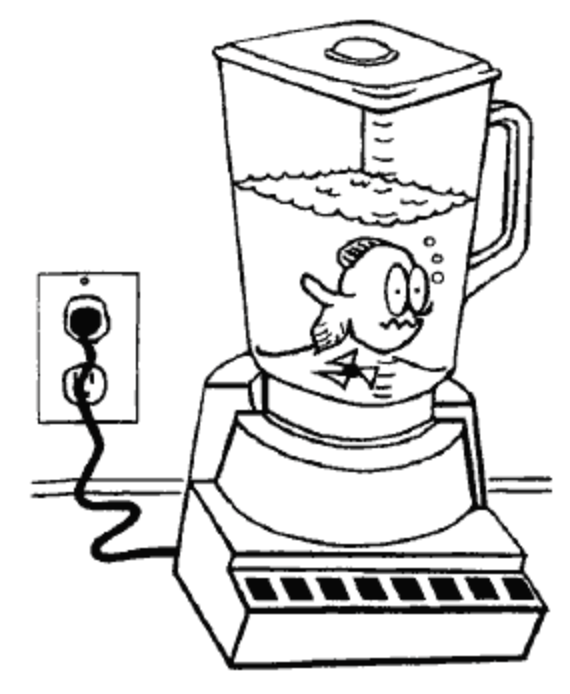
  7. Sleeplessness – Guilt wakes me in the wee hours, especially when I’ve crabbed at him for things he can’t help. Peter’s attention span is worse than a goldfish’s and he’ll ask the silliest things over and over. Within a few seconds he forgets I yelled and when I apologize he doesn’t know why.
  8. Irritability – No one has ever called me patient. Lately Peter has started reorganizing the pantry every few days, lining up jars and moving boxes so I can’t find anything. Most wives would be thrilled if their husbands undertook that task, but I’m an angry bumble bee.
  9. Lack of concentration  – I used to be so organized, so tidy, but no more. My personal spaces are in the same sorry state as my mind.
  10. Health problems – Many times I wonder if his dementia has rubbed off on me. Am I losing control too? Is it stress, or am I destined to be a statistic as well?
    I talked to my doctor. He did the basic tests and I passed. “Stress,” he said, “it’s stress. You’re doing fine, but take time for yourself, do what you can to alleviate stress.”

My mother always said, no matter how bad things may seem, there’s always someone who is worse off than you. I’m glad I’m not a goldfish.


Screen Shot 2015-08-19 at 3.24.59 PM

2016 National Society of Newspaper Columnists’ contest finalist. 


Laughter, always the best medicine.

This caregiving business is a series of lessons on the run. I have an “ah ha” moment almost every day.

Take today.

Every morning, I put our prescription meds into two shot glasses — Peter’s on the left of the coffeemaker, mine on the right. He takes an 81 mg aspirin, Losarten for blood pressure, Wellbutrin for mood, Livolo for cholesterol, and Vitamin D3 because dementia patients are thought to be lacking in the D vitamin. Oh, and Namenda, the well advertised medicScreen Shot 2015-08-09 at 5.49.32 PMation thought to slow the effects of dementia-related diseases. How could I forget that one?

After dinner, I dole out Glucophage, the supposed answer to leveling his blood sugar levels since he won’t leave sweets and carbs alone no matter how often the doctor explains nor how often I nag. Just before bed, he takes Donepezil (Aricept), to treat confusion, possibly improve memory, awareness and the ability to function.

How well do these meds, particularly Nameda and Donepezil, perform? I have no idea. I do know that his taking pills from the wrong shot glass was an important lesson-in-waiting for me this morning.

I discovered the mistake when I poured my second cup of coffee. Peter was already watching West Ham beat Arsenal. “You haven’t taken your pills yet, Peter. No, wait! Mine are gone and I never take them until after my coffee!”

He had no idea what I was talking about. So much for awareness.

“Did you take my pills?” I asked, showing him the little empty glass. “Yes, you took mine.” I answered my own question.

“I don’t know…probably,” he said. “What will happen to me?”

“Hm, well, my super prescription vitamin may give you a boost. Maybe you’ll have the energy to mow the grass…” I laughed at my own joke as he made a face that said, “Not bloody likely…I’m watching soccer.”

I didn’t expect that he’d cut the grass, and he didn’t. But, lesson learned, from now on I’ll keep my medications in a secure container in my pocket.

Screen Shot 2015-08-09 at 9.25.15 PM

Ah ha! A beer-on-a-stick might work.

Header photo: Morning glories keep their eyes on Peter.

2016 National Society of Newspaper Columnists’ contest finalist. 


Don’t dwell on the disease…

No disease should be allowed to have as its victims both the patient and the caregiver. But that is exactly what is happening every minute of every day.”

—Meryl Comer, Slow Dancing with a Stranger:
Lost and Found in the age of Alzheimer’s
(2014)

[Author Meryl Comer] argues persuasively that we can’t “age-proof our lives” and that this disease, “the dark side of longevity,” is a “looming health catastrophe” for us all. “My greatest fear,” she writes, “is that mine will be the family next door by midcentury.”

— Jane Gross, The New York Times, September 1, 2014


…Value the moments, the pearls of wisdom,
their smile and humor.”

— St. Elizabeth


Header drawing: Alzheimer, Krankheitsfälle d. spät. Alters.  Verlag von Julius Springer in Berlin. Plate 5, Fig.2, “accumulation of lipoid material in a plaque near a capillary. becker.wustl.edu

2016 National Society of Newspaper Columnists’ contest finalist.