His sneezes, like his questions, are repetitive.

Hiccups every few minutes for several days predict a bad head cold for my husband. Sure enough, a weekend of hiccups were followed on Monday by a cacophonous, multi-sneeze cold. I started force-feeding orange juice, more cups of tea than are usual for him, and a potion a friend recommended.

Every time I approached, spoon in hand, Peter said, “What’s that for?”

“Your cold,” I answered again and again.

“Do I have a cold?” he croaked between sneezes.

“Yes,” I said, over and over. “Mmm-m.”

Tuesday, when I asked if he felt well enough to go on the usual Nobby-the-therapy-dog visit to the adult day care facility, he asked if he’d been sick. Then he sneezed and sneezed and sneezed. I cancelled.

Same again this morning. A nursing home visit was scheduled for Nobby. “How do you feel?” I asked. Peter patted himself all over and said, as he always does, “I feel fine.” He sounded worse than Louis Armstrong on a good day. I cancelled the visit.

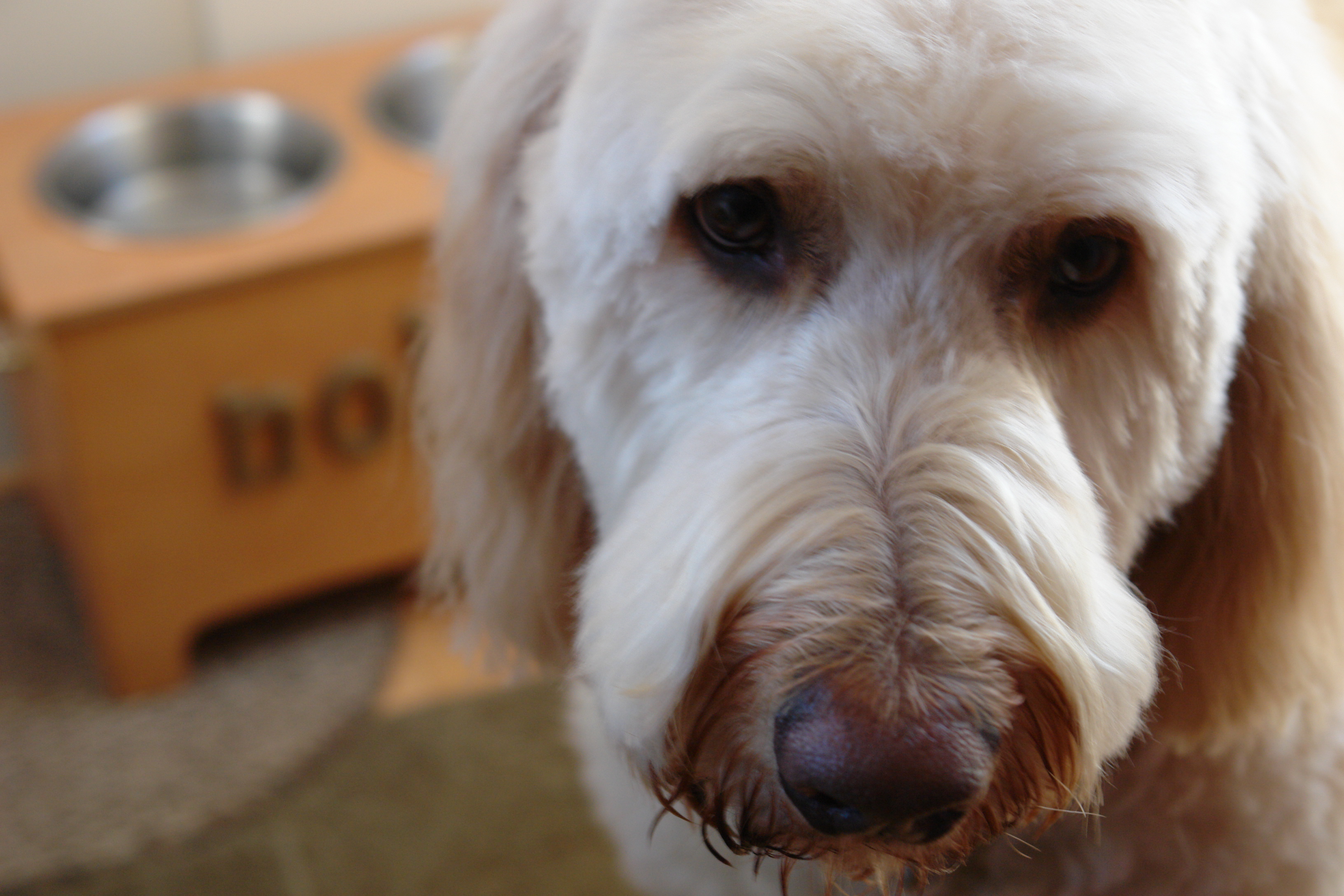
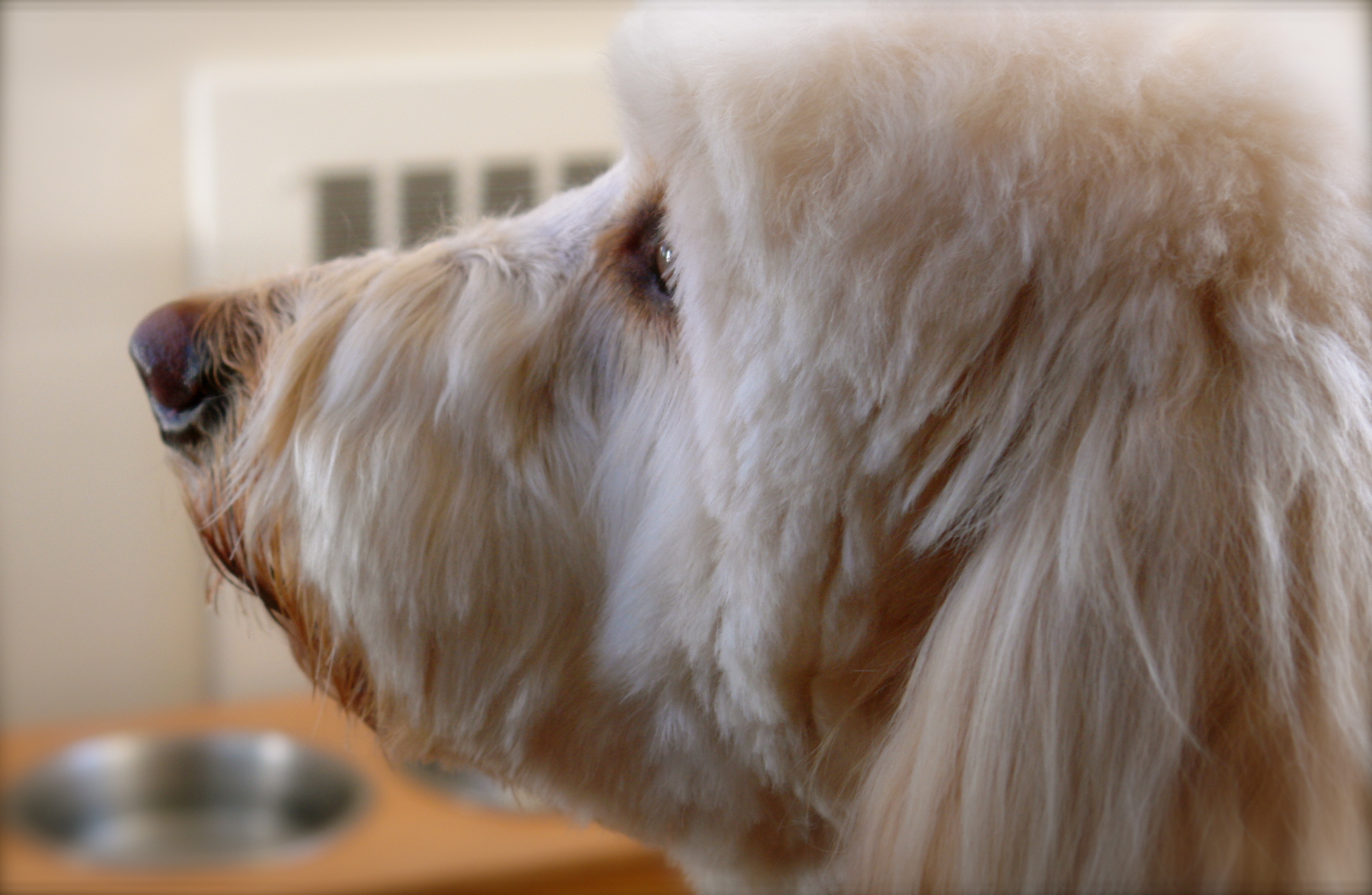
imagesimages-2There are so many horrible diseases humans contend with, but often it’s the common cold that makes us the grumpiest. Dementia is a bit like Kleenex – it wipes away the last sniffle, the dripping nose, the streaming eyes. The cold is still contagious, but dementia in all its guises, is not — and that’s a good thing.

My husband isn’t grumpy when he has a cold, he’s sneezy. But when I catch his colds, lookout, I’m grumpy.


Sneezy and Grumpy sketches: “Snow White and the Seven Dwarfs,” ©Walt Disney Studios, 1937

Header photo: A sneeze magnified.

2016 National Society of Newspaper Columnists’ contest finalist. 

What lurks in the shadows of his mind, cont.

Same evening. Further attempts to talk in the noisy restaurant. Same puzzled expression on my husband’s face.

“What do you think it’ll be like fifty years from now?” he asked. He spread his hands and flapped them around.

“Here? This restaurant?”

“No-o. The world. Here. How many people will there be? Will they all fit?”

“Fit? I don’t know.” I said. He poses this sort of  question a lot.

“This is a small island you know…” he said.

“Island? What island?”

“England. Scotland. Ireland. Wales.” He nodded, proud of himself.

“Peter, where do you think we…”

He slapped his head. “Oh, silly me. We’re not there, we’re here.”

“Where? Where do you think we are?” I asked.

He squeezed his eyes shut and shook his head. “Virginia?” he said at last, then asked, “Did you know me before I got like this, before my mind went away?

“I did.” I said. “I remember. We met forty-two years ago. Your mind was fine back then.”

“Oh you, you remember everything,” he said.

“Someone has to.” I said. I knew what was coming.

He sighed. “What would you do without me? No, no, I mean…”

“What would you do without me?” I asked, as I always do.

He laughed. “That’s a good one, isn’t it?” He loves his own jokes.

Header photo: Lighthouse, England.

2016 National Society of Newspaper Columnists’ contest finalist. 

‘I can’t go back to yesterday because I was a different person then.’

Losing car keys doesn’t mean Alzheimer’s disease is lurking, but forgetting what the keys are for might. That’s a simplistic example of the difference between simple forgetfulness, and a more serious problem.

I asked Peter to put some towels into the washer. He went to the laundry room and stood in front of the washer and dryer, muttering. After a few minutes he said, “Which one do you want me to use?”  Since he hasn’t done his own laundry in forty years or more, the question wasn’t too surprising.

On the other hand, I’ve been doing weekly laundry for more than fifty years, but lately I simply forget it until I realize I’m out of underwear! I do know which appliance is the washer, which, the dryer.

Once upon a time I was so organized that my brain was a calendar, neatly compartmented with to-do lists. I never left work without clearing my desk and writing a chronological list of the next day’s projects. When Peter left work, papers were an avalanche waiting to happen. Pens and pencils were strewn like trees in the Midwest after a tornado. Dust bunnies raised families in the crevices of his desk chair.

Now, both his desks look like a military parade: pencils and pens aligned at right angles to the front edge, calendars hung at studied levels — turned to the wrong months however — and stacks of coins in ranks as if on review. His other desk, the one dedicated to model ship building, is arrayed similarly: special brushes and tiny tools in rows, regimented.

My desk looks as if the recycling truck backed up and dumped a load of papers, boxes, sticky notes and Mentos wrappers. Every few weeks I attempt to organize my desktop and files. The mess is viral.

Household chores? While Peter attends to his self-assigned tasks, I seldom even clean the coffee maker anymore. For many years I had a rigid first-Friday-of-the-month routine: run vinegar through the coffeemaker, use baking soda and vinegar in all the drains, and turn the mattress, end-to-end one month, side-to-side the next.

pea_princessBack then, flipping the mattress made us laugh so much we couldn’t lift the thing. Neither of us remembered, one time to next, how to do it, end-to-end or side-to-side, without demolishing the ceiling fan. Last week, I realized we hadn’t turned the mattress in months. I called Peter to help.

We’ve never agreed how to do it. In the past we laughed at our contortions, but this time we barely managed to heft it, much less laugh.

Time was, I vacuumed and dusted obsessively. Now I have Carri who does it for me, and if she’s away, I don’t bother. Peter likes to “Hoover,” as he calls it, but insists on parallel lines across the rugs. He combs their fringed edges with a fork. I wish his hair looked as good.

We’ve reversed habits. His new obsessiveness stems from a need to have control. My escalating lack of organization says I have more chores than I can manage, so I let everything slide. Peter can’t help himself, but I really must revive my routines.

A magic wand might help!

Screen Shot 2016-01-13 at 7.26.23 PM

Quote at top: Lewis Carroll, Alice in Wonderland

2016 National Society of Newspaper Columnists’ contest finalist. 

Random thoughts, not remembered.

Peter has trouble expressing himself more and more frequently. The other evening he was trying to explain something, but his words were jumbled. I leaned closer hoping I could catch a few words and make sense of them. Instead, he smacked himself on the head and said, “My thoughts just won’t stay in one place long enough for me to remember what I’m trying to say.”

We both laughed, but that in itself was quite a mouthful for him these days.

APHASIA (uhfey-zhuh) noun, Pathology.
The loss of a previously held ability to speak or understand
spoken or written language, due to disease or injury of the brain.

It’s so difficult for those of us whose thoughts do stay in one place to imagine what it would be like to have some form of dementia. Peter falls back on his sense of humor to get by, and I borrow on that a lot. At times, though, it’s exhausting, probably as much for him as it is for me.

Screen Shot 2015-09-22 at 2.56.34 PM

©Dan Murphy cartoon, 6/18/95

Later Peter asked, “Did you know me before my mind got like this,” he waggled his hands above his head, “before my bike accident?”

“Of course I did, silly,” I answered. “That was in 1980. We met in 1974. Besides, your mind didn’t get ‘like this’ until a few years ago. ‘”

“How do you remember all that?”

“‘Elephant brain’,” I joked. “Important stuff. How could I forget?”

“I did,” he said sadly.

Header photo: web grab

2016 National Society of Newspaper Columnists’ contest finalist. 

Is it Wednesday?

There have been several movies showing locally in recent weeks that answered my husband’s repetitive, “Any good movies on?”

Last night we saw “A walk in the woods.” Loved the book — one of my favorites by Bill Bryson — and we liked the movie. Lots of laughs and, of course, the scenery was outstanding. The opening scene was filmed at McAfee Knob not too far from here, and the rest of the Appalachian Trail views were reminiscent of its path through southwest Virginia, though it was shot near Atlanta.

We ate at a favorite restaurant, Gillies, before the 7:00 p.m. showing. A stutter in Peter’s brain kept him glancing at a table card that reminded patrons Wednesdays were “Dinner and movie at The Lyric” nights.

“What day is it?” he asked over and over. “Wednesday? Is it Wednesday?”

Each time I nodded, his eyes sparkled because we’d chosen the right evening to go out. Suddenly, unexpectedly, he knocked his water over. It flooded across the table towards me, rained down into my chair, then onto the floor. The waitress tossed me a towel and I grabbed extra napkins to mop up.

Peter was bewildered. “Did I do that?”

“It was an accident. How many times have I done the same thing?” I asked to remind him that I’m the real klutz.

He shook his head and looked down. I would’ve been embarrassed, but he wasn’t because he didn’t remember he’d caused the mishap. He was very upset. I continued to sop, trying to stem the puddle spreading under the table and toward the feet of the woman sitting behind Peter.

DSC00709_2Suddenly, his eyes brightened again, “At least I didn’t spill this,” he said, holding his beer up. “That would have been awful, wouldn’t it, eh?” He watched carefully to make sure I got his joke.

I did.

Header photo: November walk in Leslie and Martin’s woods.

2016 National Society of Newspaper Columnists’ contest finalist. 

Tail of a dog.

Almost every Wednesday for the past four years, Peter and Nobby have visited area nursing homes with Bill, Peter’s faithful companion.  Nobby is the star of the weekly events, of course, and he luxuriates in the cuddles.

Last week, Bill arrived on time, as he always does, and Peter was ready, though he usually is not. As they headed out the door, I yelled, “Haven’t you forgotten something?”

Peter turned. “I don’t think so…,” he said.

I pointed to Nobby. “What about him?”

“Oh, is he going?” he asked, as if this were something new.

Well, yes,” I said. “It’s Wednesday.” Peter shook his head, disgusted with his drifting memory. Bill and I couldn’t help but laugh at the thought of Peter walking into the nursing home, red leash in hand and no dog attached.

DSC00223

More and more often these days I have to remind Peter — make that nag — that it’s time for Nobby’s walk. This morning, Nobby waited patiently by the basement door. When I called to Peter, he said, “Yes, yes, I’m coming.” Nobby flip-flopped his tail hopefully.

Finally Peter came up from the basement. I heard him fiddling with the leash. After a spate of muttering from Peter and a few yelps from Nobby, I went to investigate. They were in the laundry room. Peter was laughing so hard tears were streaming down his face. “Helped when I put the leash on the right end,” he said, sputtering.

“What, you mean you put it on his back end?”

“Yes, and he didn’t like it.”

“Poor dog! I’m sure he didn’t!” I said. “How would you like a harness around your nether region?”

Peter grimaced. Nobby got two treats.DSC00224_2

Header photo: Nobby at Pandapas Pond.

2016 National Society of Newspaper Columnists’ contest finalist. 

‘I’m still here, but yet I’m gone…’*

At Leslie’s birthday celebration, one conversation centered on movies that induce tears. Granddaughter Samantha, a real ham when she wants to be, told us about a “romantic comedy” she’d seen that had a horrific ending.  She was indignant. She sobbed. When Leslie’s friend Kenna added her observations and her tears to the story, the rest of us howled.  I seldom cry, and “Lassie come home” and “The Fighting Sullivans” are the only movies that moved me to tears, ever.

Screen Shot 2015-10-23 at 3.02.42 PM“I’ll be me” is the 2014 film about country singer Glen Campbell and his Alzheimer’s-inspired farewell tour. It has been in theaters, but I found it on Netflix.

I watched it secretly. I didn’t want Peter to watch me watching it, even though I don’t think he would recognize himself in Campbell. I’ve slowly come around to admitting to myself that my husband has Alzheimer’s, though I say “dementia” to him if he questions why he can’t remember things. Dementia is an umbrella, Alzheimer’s, a hurricane that turns the umbrella inside out.

When Campbell was diagnosed in 2011, he chose, with wife Kim’s encouragement, to have his farewell tour filmed. He wanted people to know he had the disease, but could still sing and play guitar. “Hell, I’m not done yet,” he said.

A camera was there to follow him as his brain was scanned using the newest and most definitive diagnostic techniques. The camera was in the doctor’s office when he and Kim heard the dreaded words: “Highly probable that you have Alzheimer’s Disease.” Cameras followed him on his final tour that was to be three to five weeks, but turned into 151 performances worldwide. As long as the singer could keep going without too many hiccups his wife, children, and musicians thought he should continue doing what he loved.

My husband can’t sing, though he thinks he can, and he doesn’t have an entourage to bolster him. But his sense of humor — wacky, corny — is like Campbell’s.  Peter is handling his downward spiral the way Campbell does: hiding behind stoicism, silliness, and wild excuses. Bluffing, in other words.

Campbell is 78, a year older than Peter. The singer can no longer put words together intelligibly — aphasia — though he still plays his guitar. Peter has a hard time finding words and seldom says much, especially in a group. He’s never been a talker, so his lack of conversation is nothing new to those of us who know him.

The film was a Bandaid to my soul. Seeing that Campbell continues to clown around the way he always has, using goofiness to camouflage his fading memory, was like watching my husband. Peter’s clowning not only saves us — it’s impossible not to laugh — but it lets him think he’s fooling me and anyone else who’s around. Occasionally, a look crosses his face that says, I know I’m being silly, but it’s all I have left.

Some of Kim Campbell’s asides resonate. In two scenes, there are shots of the singer holding up plates and licking them clean. In a cutaway, she says, “I get so mad at him when he does that…I tell him it’s bad manners…I go into the pantry with my plate and sit on a stool to eat.” Later, she says tearfully, “I know he can’t help it, but I don’t like to see him that way.” Her words helped me feel better about my own reactions to  my daily triggers.

The singer now calls his wife of 32 years Mrs. Campbell. Her laugh is sad.

“I guess my message to caregivers is, stop to look on the bright side …. Make the best of a bad situation.…” When asked about the message, she said, “This film is funny…uplifting. Yes, it deals with Alzheimer’s, but it’s not a downer…not depressing. You learn a lot and it’s very educational. … We want people to know that it’s just full of laughter. Because people might go ‘Oh, it’s about Alzheimer’s. I don’t want to go see this film.'”

“I’ll be me” is funny, yes, but I confess, it’s now on my list of movies that make me cry. It is a must-see.

Screen Shot 2015-10-23 at 2.54.27 PM

*First line of “I’m not gonna miss you,” the last song Glen Campbell recorded.
Songwriters: Julian Raymond and Glen Campbell.
Lyrics © Warner/Chappell Music, Inc., BMG Rights Management US, LLC
“I’ll be me” directed by James Keach; produced by Trevor Albert and James Keach


2016 National Society of Newspaper Columnists’ contest finalist. 


Answer the phone already!

The home care manager with our health insurance company —  I’ll call her “K” — phones each month and asks for Peter. Since my husband will neither answer nor talk on the phone, I take her questions. Or if I’m busy, I’ll say the timing isn’t convenient. I hope she doesn’t get upset when I put her off. She sounds very sweet, and she is just doing her job.

Yesterday was different. When she called, I simply handed the phone to him. He glared at me. “Hello?” He was wary. “Oh, so far, so good,” he said, his stock answer these days when anyone asks how he is. When he answered “Six each morning,”  I knew she’d asked about his medications. “What do I take every day?” he stage-whispered to me. I was up to my elbows in sudsy water cleaning cupboards, so I yanked a drawer open and showed him the prescription bottles so he could read them off.

Next she asked about his exercise. “Yes, the dog still walks me every day, twice a day. Yes, nursing homes every week…no, oh no, not for me! Nobby visits the people who live there. No, they don’t want to see me,” he laughed.

She already knew all the particulars from talking to me, but I was glad I’d made him take the call because it forced him to talk. I constantly try to engage him, to draw him out. It’s exhausting.

“K” had a few more things up her sleeve. “Hm, let me ask the wife,” he said. I glared at him. He knows — he hasn’t forgotten this — that I HATE being called “the wife.”  “Do I have any doctor appointments?” he mouthed as if it was a secret. I told him the dates.

Screen Shot 2015-09-02 at 12.02.10 PMThen came the routine cognitive impairment questions: day of week, month, year? Peter thought she asked because she didn’t know, so he walked over to the dry erase board I update every morning. “No you don’t,” I yelped, quickly wiping the board clean with my finger. “She wants to know if you know!” He tried to get around the corner to the calendar, but I blocked that too. “You sneaky devil,” I said. Of course I laughed.

He chuckled and told her, “My wife [he didn’t say the wife this time] won’t let me look at the calendar, but I know it’s August…um, tenth? Year? I know it’s two-thousand-something…thirteen? Oh-h, twenty-fifteen! Already?”

I’m sure the conversation left her laughing. It did me.


Header photo: JodyWissing, Digital Fondue, (11/16/10)

2016 National Society of Newspaper Columnists’ contest finalist. 

 

Ten more years.

We set off for Charleston, West Virginia just before 9:00 a.m. Our destination was the US Customs and Immigration Office (USCIS). My English husband had to be photographed and fingerprinted so he’d be a legal permanent resident for another ten years.

Our little corner of Virginia is tucked into an indent in West Virginia’s border. The drive is a beautiful one that hugs the New River as it flows north, continuing to carve away at the Allegheny Mountains as it has done for millennia.

As happens so often these days, a thought lodged in Peter’s mind. Over and over, like a needle stuck on one of his 78 rpm records, he said, “I can’t imagine how they moved all these rocks and trees to make this road, can you?” I always try to answer his questions until I realize he’s in repeat — in my mind it’s “rePete” — mode. After about the fifth rePete I murmer the noncommittal and very useful British “mmm.”

Even with a stop for coffee, we arrived in Charleston two hours early. “Arriving at your destination. Turn left. Turn left here!” the GPS nagged frantically.  Silly thing failed acknowledge the median down the middle of the street. I had to drive another two blocks to make a U-turn in order to truly arrive.

The name on the building wasn’t the same as the information USCIS had furnished, so I parked and went inside to make sure we were in the right place. We wanted to have lunch before Peter’s two o’clock appointment.

Not only was it the right place, but the young man in charge offered to process Peter right then. He began to sign in and, as I often do, I tried to help. I was told politely that Peter was to do it himself. I whispered to the fellow that my husband has dementia and would need some prompting. He whispered back that he understood. “We’ll take care of him,” he said.

He handed Peter additional papers and a pencil. It was the very same form I’d completed on-line several weeks earlier to expedite the process! Peter worried about using a pencil instead of a pen, but I assured him that’s what they wanted.

“Hm, do you think his eyes are hazel,” the young man asked when Peter completed the paperwork. “I think they’re blue,” he said as he studied my husband’s eyes. Difficult for Peter to hold eye contact for so long, but he managed.

“Well, he’s always said ‘hazel.’ But he did start to write ‘gray’ for eyes and ‘hazel’ for hair color,” I said.

He laughed. “OK, hazel they are.”

Peter was processed quickly — no messy ink these days, nor film either — and we were on our way to lunch within minutes. At his scheduled appointment hour, we were almost halfway home.

The drive was punctuated with another question that had snagged in his brain. “How long before I have to do this again?”

“Ten years. They probably won’t even care by then,” I said. “And I certainly wouldn’t drive you to Charleston anyway!”

“Why not?” he asked.

“Can’t drive a wheelchair on the interstate,” I said, and we laughed.

Screen shot 2015-06-18 at 7.23.48 PM

National Park Service photo.

Header photo: New River, Virginia, Eric T.Gunther, Creative Commons Attribution.

2016 National Society of Newspaper Columnists’ contest finalist. 

Always read the fine print.

Early in May, for some reason, it occurred to me to check the expiry date on my English husband’s permanent resident visa, previously called “green card.” Good thing I looked — expiration, May 28, 2015.

Ten years ago, we had a nice day trip to Charlotte, NC to renew both his card and his British passport. This year, a trip anywhere is an ordeal, so I did a search to see if USCIS is doing on-line registrations. Yes-s!

There was a stumbling block on the very first page. Peter couldn’t remember the year he came to the U.S, but he knew he was 28, so he added that age to his birthyear, 1938, and came up with 1966. (I was pretty sure he “got off the boat” eight years before we met in 1974.) The month and date, port of entry, and other necessary details like his alien registration number were lost in his fog. Finally, I broke the code of alpha/numerics on his passport and deduced he arrived in New York City on Wednesday, November 9, 1966.

Over several days I filled in the six pages. When, I called Peter to read over the document, he stumbled over his mother’s first name, Mabel.

“Everyone called her Doll,” he argued.

“Yes, but that was her nickname,” I reminded him. “Her given name was Mabel.” After some discussion he agreed.

When he read through his own physical characteristics he said his eyes were not hazel. “What color are they then?” I asked, deleting hazel.

He went to the mirror and after studying his eyes for some time, he said, “I’d call them bluey/browny/green.”

I typed h-a-z-e-l into the blank again.

After he’d read the fine print and signed electronically, he asked, “Am I good forever now?”

I told him he’d have to renew in ten years. “But, you’ll be 87, so they probably won’t chase you down.”

“You mean without the card, I could’ve…”

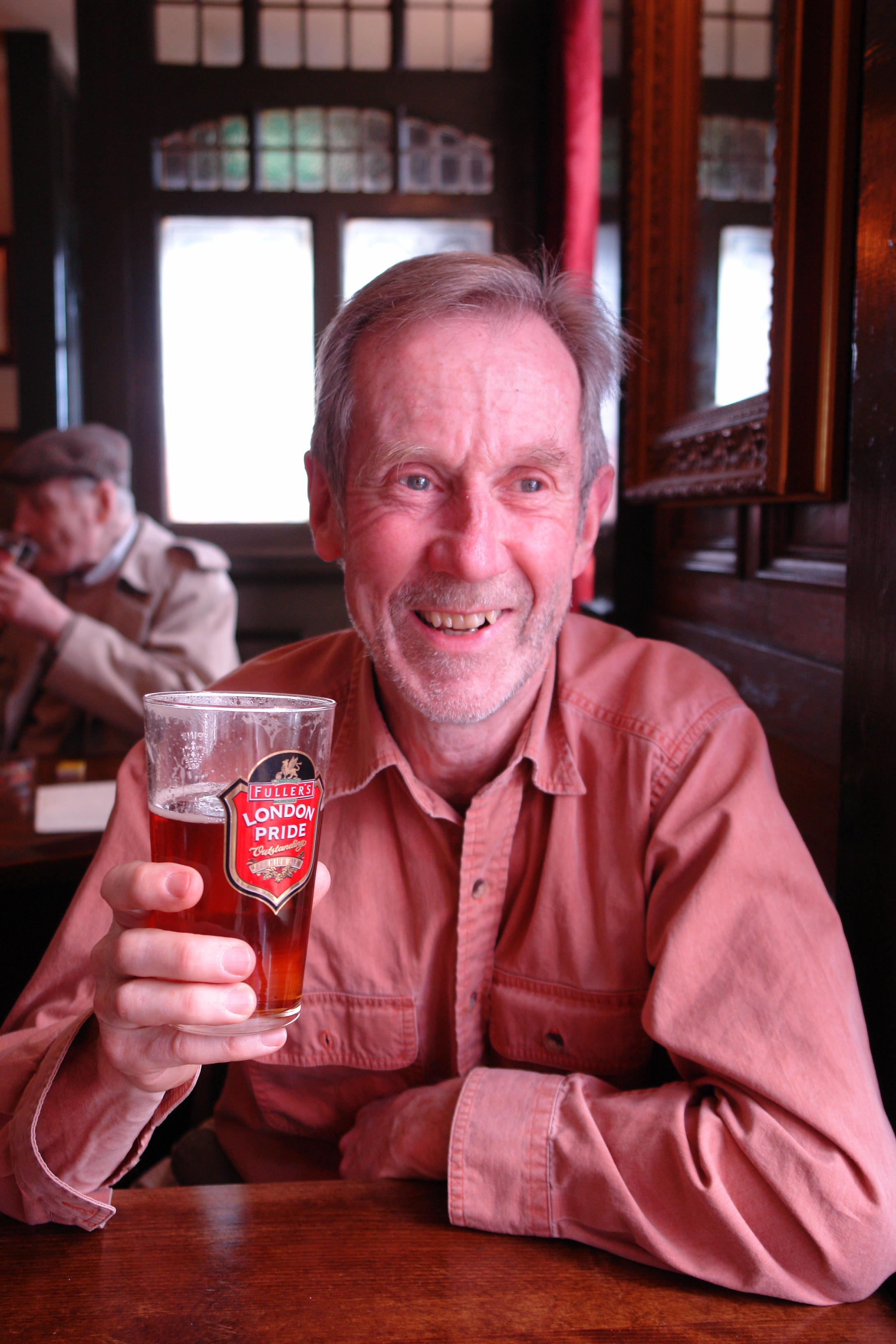
Peter with his favorite pint, London Pride.

Peter with his favorite pint, London Pride.

“Oh, darn,” I laughed, picking up on his thread, “yes, you might have been deported if I hadn’t realized your card was going to expire. You could have been shipped back across the pond to spend the rest of your life in the corner pub… singing your bawdy songs…and…”

“Playing ‘arrahs’,” he said wistfully. [Arrahs = arrows = darts to my Englishman.]

“Sorry, I already I clicked ‘send,'” I said. “But in 2025, if immigration still wants you, you can go back ‘ome.”

DSC07668

Header photo: Peter enjoys the gardens, Isles of Scilly, England, 2009.

2016 National Society of Newspaper Columnists’ contest finalist.