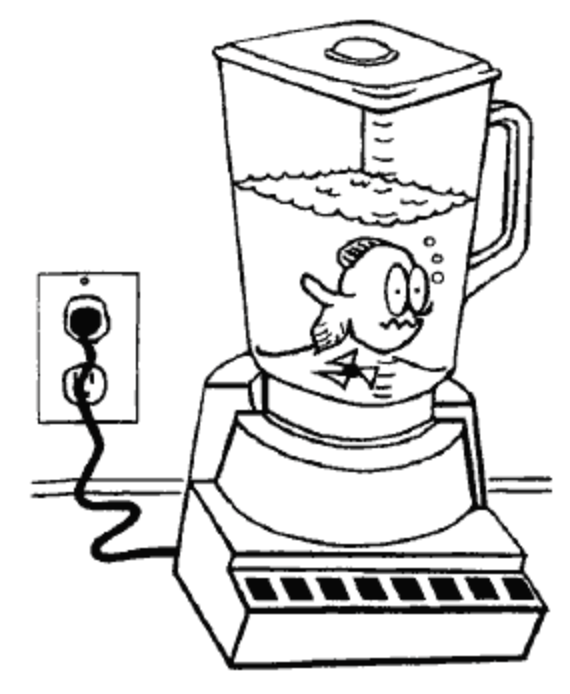
Attention span of a goldfish.

Screen Shot 2015-08-19 at 3.16.32 PM

Ten symptoms of caregiver stress were listed in an Alzheimer’s Association newsletter with this caveat: Alzheimer’s caregivers frequently experience high levels of stress. It can be overwhelming to take care of a loved one with Alzheimer’s or other dementia, but too much stress can be harmful to both of you.

 No kidding!

Screen Shot 2015-08-19 at 3.14.18 PM

In any given day I deal with several of these, and I’m sure other caregivers do the same:

  1. Denial – Early on, I was convinced that if I kept trying to force Peter to remember things, to eat right, to get out more he’d at least maintain his status quo.
  2. Anger – Screams, like geysers ready to erupt, lurk just below the surface of my “looking for laughs” demeanor. 
  3. Social withdrawal – Sometimes it takes too much effort do anything at all, much less be sociable.
  4. Anxiety – I’ve finally done what I should have done sooner: hired more help for Peter and for me. What a difference to have the house cleaned and tidied by a young lady who is energy personified, the garden maintained by a woman who knows first-hand what it’s like to be a caregiver, niggling tasks done by a handyman friend.
  5. Depression – Big mistake to think that I didn’t need anti-depressants. Hindsight and a meltdown proved me wrong.
  6. Exhaustion – I used to keep my house to a certain standard, not the same white-glove-test standard my mother used, but I kept the dust bunnies at bay, food in the fridge, cookie tin filled, laundry done. When I realized it had been weeks since I’d cleaned the bathroom or changed our sheets, I knew I needed more help. (see #4)
  7. Sleeplessness – Guilt wakes me in the wee hours, especially when I’ve crabbed at him for things he can’t help. Peter’s attention span is worse than a goldfish’s and he’ll ask the silliest things over and over. Within a few seconds he forgets I yelled and when I apologize he doesn’t know why.
  8. Irritability – No one has ever called me patient. Lately Peter has started reorganizing the pantry every few days, lining up jars and moving boxes so I can’t find anything. Most wives would be thrilled if their husbands undertook that task, but I’m an angry bumble bee.
  9. Lack of concentration  – I used to be so organized, so tidy, but no more. My personal spaces are in the same sorry state as my mind.
  10. Health problems – Many times I wonder if his dementia has rubbed off on me. Am I losing control too? Is it stress, or am I destined to be a statistic as well?
    I talked to my doctor. He did the basic tests and I passed. “Stress,” he said, “it’s stress. You’re doing fine, but take time for yourself, do what you can to alleviate stress.”

My mother always said, no matter how bad things may seem, there’s always someone who is worse off than you. I’m glad I’m not a goldfish.
 

Screen Shot 2015-08-19 at 3.24.59 PM

2016 National Society of Newspaper Columnists’ contest finalist. 

 

The 36-hour weekend.

“A change is as good as a rest,” is one of the many sayings Peter attributes to “his ol’ Granny.”  That bit of English wisdom carries a lot of truth. I was never exactly sure what it meant until I experienced it. Now I know.

Peter and I can no longer take the weeks-long adventuresome trips we used to, but we now have access to a place that rivals some of our long holidays, Martin and Leslie’s log house in the  mountains not too far from here. It’s a wonderful spot — serene, isolated, with a river running past. Calmness wafts over me as soon as we drive in.

Screen Shot 2015-08-17 at 3.01.19 PM

The island idyll.

Generally we arrive Saturday mid-morning and leave before dark on Sunday. Just 36 hours or so, but those hours really are as good as a week away.

DSC01212

Leslie hides.

We don’t do much there. Sometimes we help with gardening or other projects, but mostly it’s a place to kick back, relax. Leslie and I play cards, and we’ve recently rediscovered coloring books and the concentrated joy they bring. We also spend a lot of time looking for mica-studded rocks that glitter in bright sun. The whole area shimmers as if a fairy godmother had just wafted through with brilliant sprinkles.

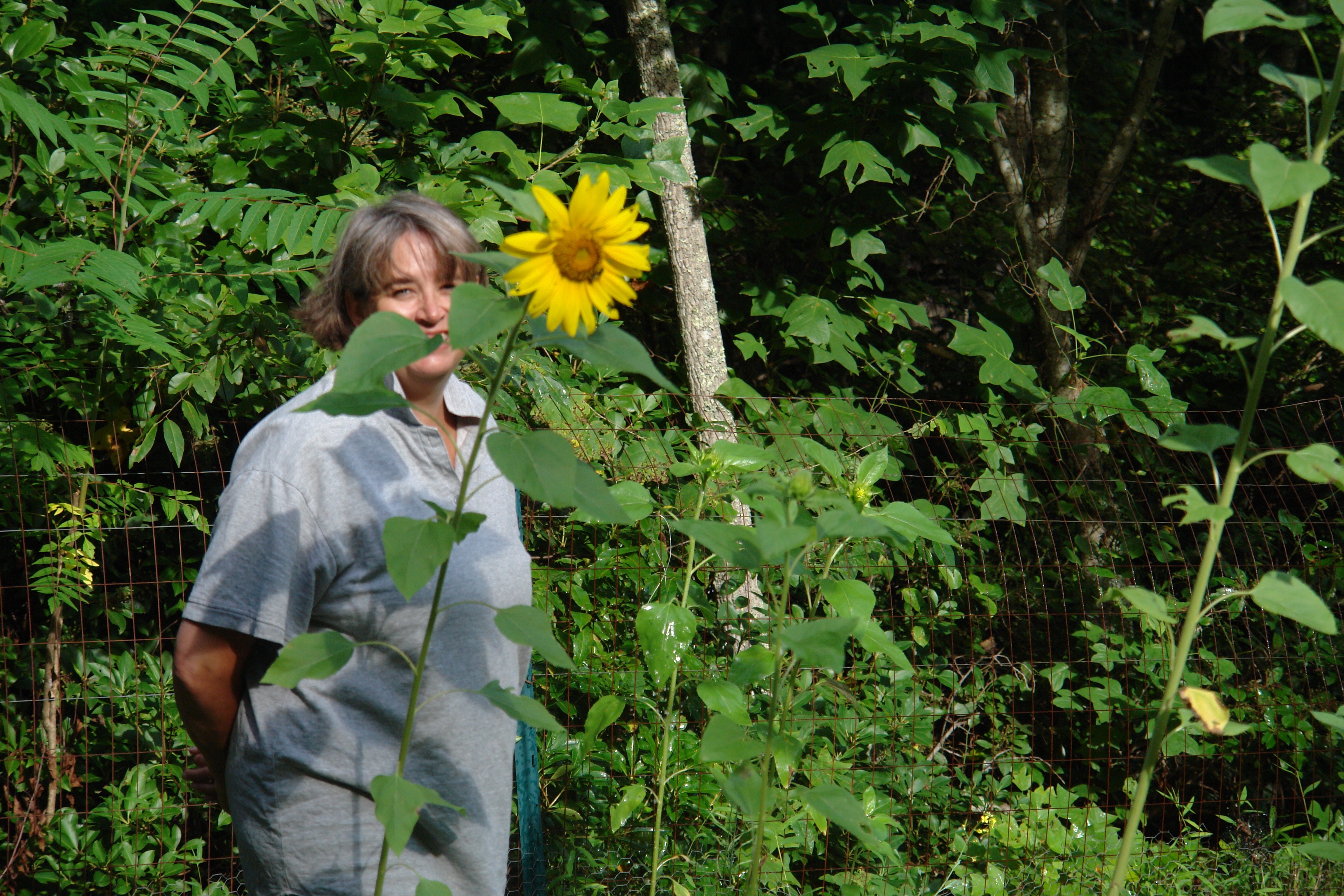
Martin fishes in season, but Peter excuses himself because he’s “not a water person.” In truth, he can’t swim. A few weeks ago, Leslie convinced him to put on shorts and water shoes, then wade through ankle deep water to  the stoney island where we have lunch, read, snooze, or just be.

Screen Shot 2015-08-07 at 12.29.39 PM

The fish were biting that day.

Leslie and Martin swim, but I like to float in an inner tube now that the river’s flow has changed just enough to create a calm spot that allows me to stay put rather than drift away to the Atlantic. A few weeks ago, the two of them tubed together holding hands. Cute until Martin yelped and jerked upwards. Leslie shrieked with laughter then she too cried out. Mart yelled, “THE FISH ARE BITING OUR BUTTS!”  They returned to the safety of the island, laughing hysterically.

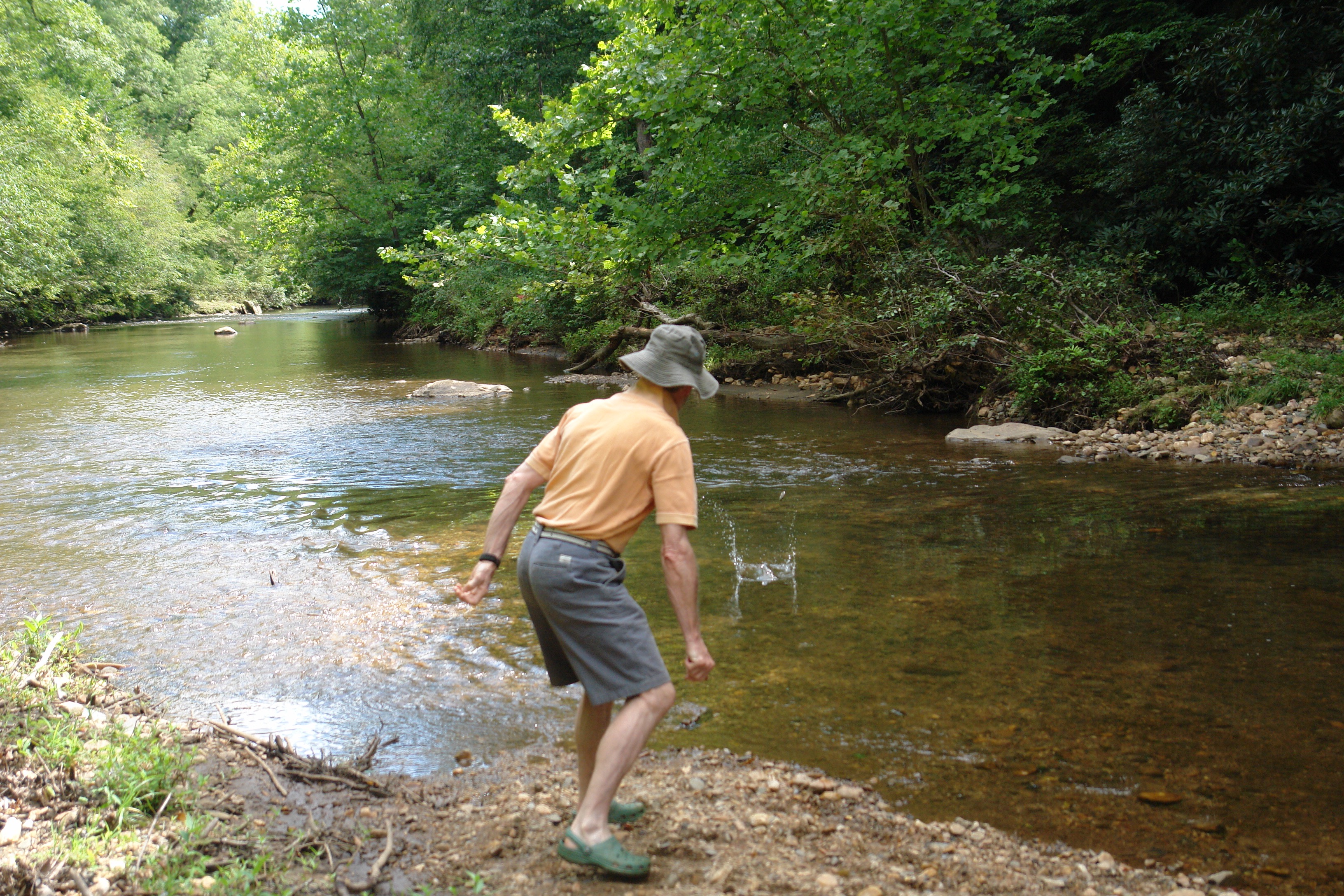
Peter revisited his stone-skipping prowess that day. He’s still a champ, sometimes getting ten or eleven skips per stone. I watch him and think, our travels of several years ago were terrific, but really, it doesn’t get much better than this!

DSC01225

Peter still has the technique.

Photos: A favorite retreat.

2016 National Society of Newspaper Columnists’ contest finalist. 

Laughter, always the best medicine.

This caregiving business is a series of lessons on the run. I have an “ah ha” moment almost every day.

Take today.

Every morning, I put our prescription meds into two shot glasses — Peter’s on the left of the coffeemaker, mine on the right. He takes an 81 mg aspirin, Losarten for blood pressure, Wellbutrin for mood, Livolo for cholesterol, and Vitamin D3 because dementia patients are thought to be lacking in the D vitamin. Oh, and Namenda, the well advertised medicScreen Shot 2015-08-09 at 5.49.32 PMation thought to slow the effects of dementia-related diseases. How could I forget that one?

After dinner, I dole out Glucophage, the supposed answer to leveling his blood sugar levels since he won’t leave sweets and carbs alone no matter how often the doctor explains nor how often I nag. Just before bed, he takes Donepezil (Aricept), to treat confusion, possibly improve memory, awareness and the ability to function.

How well do these meds, particularly Nameda and Donepezil, perform? I have no idea. I do know that his taking pills from the wrong shot glass was an important lesson-in-waiting for me this morning.

I discovered the mistake when I poured my second cup of coffee. Peter was already watching West Ham beat Arsenal. “You haven’t taken your pills yet, Peter. No, wait! Mine are gone and I never take them until after my coffee!”

He had no idea what I was talking about. So much for awareness.

“Did you take my pills?” I asked, showing him the little empty glass. “Yes, you took mine.” I answered my own question.

“I don’t know…probably,” he said. “What will happen to me?”

“Hm, well, my super prescription vitamin may give you a boost. Maybe you’ll have the energy to mow the grass…” I laughed at my own joke as he made a face that said, “Not bloody likely…I’m watching soccer.”

I didn’t expect that he’d cut the grass, and he didn’t. But, lesson learned, from now on I’ll keep my medications in a secure container in my pocket.

Screen Shot 2015-08-09 at 9.25.15 PM

Ah ha! A beer-on-a-stick might work.

Header photo: Morning glories keep their eyes on Peter.

2016 National Society of Newspaper Columnists’ contest finalist. 


Don’t dwell on the disease…

No disease should be allowed to have as its victims both the patient and the caregiver. But that is exactly what is happening every minute of every day.”

—Meryl Comer, Slow Dancing with a Stranger:
Lost and Found in the age of Alzheimer’s
(2014)

[Author Meryl Comer] argues persuasively that we can’t “age-proof our lives” and that this disease, “the dark side of longevity,” is a “looming health catastrophe” for us all. “My greatest fear,” she writes, “is that mine will be the family next door by midcentury.”

— Jane Gross, The New York Times, September 1, 2014


…Value the moments, the pearls of wisdom,
their smile and humor.”

— St. Elizabeth


Header drawing: Alzheimer, Krankheitsfälle d. spät. Alters.  Verlag von Julius Springer in Berlin. Plate 5, Fig.2, “accumulation of lipoid material in a plaque near a capillary. becker.wustl.edu

2016 National Society of Newspaper Columnists’ contest finalist. 
‘The stuff that dreams are made of.’

“Any good movies on?” Peter asked. That’s one of several questions he repeats every single day. “No” is my usual answer because most movies these days, especially summer releases, aren’t our cups of tea. We watch Netflix a lot which suits me — the popcorn is better at home. Recently though, after a stressful week, I surprised him. “Let’s go see ‘Jurassic World’,” I said.

We headed to the huge new movie/bowling alley/arcade/restaurant hub with a stop at Wendy’s first. We snuck into the complex, chocolate Frostys tucked close, and huddled in the gloomy lobby to eat them. The place was a madhouse. And we had to choose seats and buy tickets on a touch screen computer thingie. Ack.

When we entered the theater I burst out laughing. News of summer’s blockbuster hadn’t reached our little burg — only one other couple was there. As the lights dimmed, piercing music jarred us upright in our reclining seats. We plugged our ears and wished we could mute the previews for movies we’d never go see.

Screen Shot 2015-07-21 at 11.43.30 AMWe’d liked the original “Jurassic Park,” but this fourth iteration was at least two too many. The story line was weak and the characters were shallow. “Claire,” the park’s operations manager, raced from one catastrophe to the next wearing a white linen suit and pumps — no dirt, no muck, not even a wrinkle. If the wardrobe designer had any Oscar dreams the white shoes helped dash them.

The evening was the stuff of nightmares.


Screen Shot 2015-07-21 at 8.26.56 AM

Sam Elliott and Blythe Danner dream.

“I’ll see you in my dreams” was playing at our lovely restored Lyric theater downtown last week. We had chicken kebabs at a favorite restaurant, got frozen yogurt up the street, then walked to the Lyric. In its pleasant, well-lit lobby, we exchanged hellos and hugs with several friends. Civilized. Perfect.

I asked Peter to hold my yogurt cup while I bought the tickets at the quaint old kiosk. Charming.

The refreshments stand often has homemade baked goods, but theater management doesn’t mind outside treats brought in. I was looking forward to my frozen yogurt. I savor it slowly; Peter finished his before we walked in the door. Tickets purchased, I looked around and saw him leaning against the wall scraping out…wait…my cup!  I knocked people aside to grab it. It was two spoonfuls away from empty.

“That’s mine, you bugger,” I yelped. Heads swiveled in my direction. Oops. There were enough Brits in the lobby to have heard my naughty “B” word. Poor Peter’d forgotten he’d finished his yogurt and that he was holding mine. He was bewildered by my carrying on, but he suggested sweetly that we run back to the shop to get another. “Not enough time,” I grumbled. “I’ll get one on the way home.”

When the movie started — absolutely delightful, by the way — I stopped whining. Nothing better than a romantic comedy to encourage sweet dreams.

My husband is the one with the failing memory, but I’m the one who forgot all about a replacement frozen yogurt after the credits rolled. In the end, Peter had the last laugh.

Header photo: Jurassic Park memory.

2016 National Society of Newspaper Columnists’ contest finalist. 

Is someone here?

My longtime friend Bonnie and her husband Paul visited us for a couple of days last week. They were on their way from Florida to his high school reunion in Ohio.

Bonnie had emailed several times the weeks before. She wanted to make sure it was OK for them to stay with us. “Will it upset Peter?” she wondered. “Please tell us. We understand completely. We could get a hotel room.”

I reassured her that Peter remembered they were coming, though he wasn’t sure he remembered them. They were here two years ago and he’d met them at several of our class reunions, but as he says, he can’t remember what he had for breakfast.

During the days leading up to their visit Peter was extra helpful. We’d had workmen here for a week fixing our sagging carport. Sawdust and grime had drifted into the house, crusting everything. I vacuumed and dusted while Peter scrubbed the bathtub and tidied the flower beds. He mowed the yard almost willingly.

They arrived on time, well, a minute late actually. She texted an hour earlier that their GPS said they’d arrive at 12:11. They rolled in at 12:12. But what’s a minute between old friends?

It was a pleasant, sunny day, so we ate lunch on the terrace. Then Bonnie and I chattered and reminisced the whole afternoon like two women of a certain age who have known each other for all but the first two years of their lives. Paul chimed in now and then because he knew some of the people we talked about, and Peter listened, smiling. We carried on through dinner and sat outside until the lightning bugs’ glow wasn’t bright enough for us to clear the table.

Back inside, Bonnie pulled out the eight millimeter movie film she’d brought along. She had never seen it, but she’d checked beforehand to make sure I still had my dad’s old projector. The film showed her learning to walk and on through Christmases and birthdays to the age of six or seven.

Peter laughed at us laughing with tears in our eyes.

The next morning I was having my second cup of coffee when Peter came downstairs. He looked puzzled. “What’s going on upstairs?” he asked. “Is someone in the bathroom?”

I chuckled. “Well, it’s either Bonnie or Paul,” I said.

He was still confused.

“Bonnie and Paul…they got here yesterday!” No matter how enjoyable the day and evening had been, he could not remember that we had overnight guests.

He slathered his usual two slices of toast with Keillor & Sons orange marmalade, poured coffee into his big green mug, and sat down to read the paper. He reads the paper again every afternoon because he forgets the news he’s read hours earlier. And he truly can’t remember what he has for breakfast, even though he has the same thing day after day after day.

DSC01065

Gold Coreopsis brightens shady spots, while Black-Eyed Susan vine (at top) seems to glow in the dark.

Header photo: climbing Susans.

2016 National Society of Newspaper Columnists’ contest finalist. 
 

Celebrate ‘Poppy’s hope!’

The Parade magazine in today’s newspaper features a cover that shouts: People Power: how caregivers and advocates are piecing together a better world for people with Alzheimer’s.

DSC09461

Poppy hopes.

Yesterday I posted about the Alzheimer’s Association’s fund raising event, The Longest Day™,  that’s taking place today. Though a small effort among the hundreds of teams and tens of thousands of dollars that will be raised, Carolynn’s “Poppy’s Hope” challenge has now reached a very respectable one thousand dollars.


Screen shot 2015-06-20 at 10.30.20 AM


DSC09331

The art of losing isn’t hard to master;
so many things seem filled with the intent
to be lost that their loss is no disaster.

Lose something every day. Accept the fluster
of lost door keys, the hour badly spent,
the art of losing isn’t hard to master.
Elizabeth Bishop (1911-1979) Geography III [1976]. One Art.


DSC01013_2

Even memory is not necessary for love. There is a land of the living and a land of the dead and the bridge is love, the only survival, the only meaning.
— Thornton Wilder (1897-1975) The Bridge of San Luis Rey [1927], last lines.


DSC01003

It’s a poor sort of memory that only works backwards,” the Queen remarked.
— Lewis Carroll (1832-1898) Alice’s Adventures in Wonderland [1868].


Do not dwell in the past, do not dream of the future, concentrate the mind on the present moment.
— Buddha.


DSC01061

We don’t know how strong we are until being strong is the only choice we have.
— Alzheimer’s Disease Awareness.


Photos: Our gardens at their best.

2016 National Society of Newspaper Columnists’ contest finalist. 

There’s always hope.

The Longest Day™ is a team event to raise funds and awareness for the Alzheimer’s Association. Held annually on the summer solstice, [June 21, 2015] the duration of this sunrise-to-sunset event symbolizes the challenging journey of those living with the disease and their caregivers. Carolynn Lyman of the Cancer Program is leading the ‘Poppy’s Hope’ team.
— Announcement in Faxton-St.Lukes Hospital newsletter, Utica, NY

I’d planned to organize an event for The Longest Day ™ this year, which coincidentally, is Father’s Day…tomorrow. But a couple of nasty bugbears, Stress and Anxiety, got in my way and totally discombobulated me for a time. It’s been said that the caregiver’s days are 36-hours long, and I believe it, even though Peter and I are “lucky” because he’s not in as bad a shape as some are…yet.

11160623_10205473130926745_8702219380988922005_o_3

‘Poppy,’ Carolynn, me, May 2015.

Carolynn picked up on the thread I’d dropped and started “Poppy’s Hope.” As it turned out, she didn’t have time to organize the golf tournament she’d dreamed up, so she went for a simple Facebook announcement and got a write-up in the hospital newsletter where she’s the Radiation Oncology Charge Nurse.  Though only up for a short time, her site has raised more than 535 dollars.

Screen shot 2015-01-20 at 4.22.16 PM

Purple streak.

Then, Leslie got in on the act too by posting a photo and a plea — “Wear purple for Peter” — to her Facebook page. I’m not an enthusiastic Facebooker, but I changed my profile and header photos to show the purple streak in my hair and my purple sage. Purple is the Alzheimer Association’s color.

Screen shot 2015-06-19 at 1.46.40 PM

Martin, left, Peter, me, Leslie, April 2014.


Every day is the longest day for Dementia sufferers. 
In the inaugeral year, 2012, The Longest Day™ events raised 236 thousand dollars and attracted more than 635 partcipants on 200 teams. Now in its third year, teams are as varied as the participants. Activities range widely, from playing contract bridge, quilting, and gardening, to golf, volleyball, walking, cycling, dancing, and fishing, to name a few.

Yesterday, I received a thank-you letter for the check I sent to the Alzheimer’s Association in lieu of organizing a team activity as I’d intended. A paragraph at the bottom reminded me of something I already knew: Alzheimer’s is the sixth leading cause of death in America and the only one among the top ten that can’t be prevented, cured or even slowed significantly. In Virginia alone, 130 thousand people, aged 65 and older have the disease. Worldwide, the number of Alzheimer’s and related dementia sufferers is a staggering 44 million!

Screen shot 2015-06-20 at 10.30.20 AM

The desire of sage is to render man immortal, according to a late medieval treatise. The sage plant has been praised highly throughout history for its power of longevity. Sage, L. salvia,  means to be in good health, to cure, to save.

If I thought it would help, I’d roll Peter in sage, sprinkle it on his pillow, and rub it behind his ears!

11165067_1122051104475978_1668361203311054294_o

My sage is a huge plant that I moved to Virginia from our garden in upstate New York 17 years ago.

Header photo: Clematis climbs the light post.

2016 National Society of Newspaper Columnists’ contest finalist. 

Ten more years.

We set off for Charleston, West Virginia just before 9:00 a.m. Our destination was the US Customs and Immigration Office (USCIS). My English husband had to be photographed and fingerprinted so he’d be a legal permanent resident for another ten years.

Our little corner of Virginia is tucked into an indent in West Virginia’s border. The drive is a beautiful one that hugs the New River as it flows north, continuing to carve away at the Allegheny Mountains as it has done for millennia.

As happens so often these days, a thought lodged in Peter’s mind. Over and over, like a needle stuck on one of his 78 rpm records, he said, “I can’t imagine how they moved all these rocks and trees to make this road, can you?” I always try to answer his questions until I realize he’s in repeat — in my mind it’s “rePete” — mode. After about the fifth rePete I murmer the noncommittal and very useful British “mmm.”

Even with a stop for coffee, we arrived in Charleston two hours early. “Arriving at your destination. Turn left. Turn left here!” the GPS nagged frantically.  Silly thing failed acknowledge the median down the middle of the street. I had to drive another two blocks to make a U-turn in order to truly arrive.

The name on the building wasn’t the same as the information USCIS had furnished, so I parked and went inside to make sure we were in the right place. We wanted to have lunch before Peter’s two o’clock appointment.

Not only was it the right place, but the young man in charge offered to process Peter right then. He began to sign in and, as I often do, I tried to help. I was told politely that Peter was to do it himself. I whispered to the fellow that my husband has dementia and would need some prompting. He whispered back that he understood. “We’ll take care of him,” he said.

He handed Peter additional papers and a pencil. It was the very same form I’d completed on-line several weeks earlier to expedite the process! Peter worried about using a pencil instead of a pen, but I assured him that’s what they wanted.

“Hm, do you think his eyes are hazel,” the young man asked when Peter completed the paperwork. “I think they’re blue,” he said as he studied my husband’s eyes. Difficult for Peter to hold eye contact for so long, but he managed.

“Well, he’s always said ‘hazel.’ But he did start to write ‘gray’ for eyes and ‘hazel’ for hair color,” I said.

He laughed. “OK, hazel they are.”

Peter was processed quickly — no messy ink these days, nor film either — and we were on our way to lunch within minutes. At his scheduled appointment hour, we were almost halfway home.

The drive was punctuated with another question that had snagged in his brain. “How long before I have to do this again?”

“Ten years. They probably won’t even care by then,” I said. “And I certainly wouldn’t drive you to Charleston anyway!”

“Why not?” he asked.

“Can’t drive a wheelchair on the interstate,” I said, and we laughed.

Screen shot 2015-06-18 at 7.23.48 PM

National Park Service photo.

Header photo: New River, Virginia, Eric T.Gunther, Creative Commons Attribution.

2016 National Society of Newspaper Columnists’ contest finalist. 

A life sentence.

Periodically, our long term insurance company arranges for a nurse to come assess my husband — they want to  make sure he still has dementia, I guess. Today was the day. We were lucky to have Caroline again. Peter clicked with her before and again today.

The questions she asks are almost exactly the same as those his neurologist asks, and we were at her office yesterday. They want to know if he has any physical limitations, dizzy spells, or loss of strength, and if he can do household chores or handle bill-paying.

No, no, no, no, and no.

The hardest questions for most dementia patients are: can you name the day of the week, the month, the year, the season?

No, no, no, and no.

“Now I’ll ask you to remember three words,” Caroline said. Peter groaned and she smiled, but went on. “You’ll get one point for repeating the words correctly right away, and then again after you’ve either counted backwards from one hundred by sevens, or spelled the word “world” backwards. OK?” Peter nodded. “Your words are table, book, tree.”

“Table. Book. Tree,” he said. One point.

“Now, would you rather count backwards by sevens or spell “world” backwards?” she asked.

No hestitation. “D-L-R-O-W.”

“Great!” Caroline said. “Now, the very last part.” She handed him her clipboard and asked him to copy the multi-sided figures shown. After that she asked him to write a simple sentence.

“Sentence about what?” Peter asked.

“Anything at all,” she said. “A short sentence, but it has to make sense.”

Peter quickly copied the three figures, and after thinking a few seconds he wrote a sentence.

She looked at the clipboard. “Oh-h, that’s so sweet,” she said. She showed me his sentence: “I still LOVE my wife.”

Even though he didn’t score as well as he did the last time she was here, my unsentimental, undemonstrative husband got an A+ from me.

DSC09436

Header photo: Swans at Middle Gardens, Charleston, SC, May, 2009.

2016 National Society of Newspaper Columnists’ contest finalist.