On canyon’s edge!

Three years ago I published my first post, “We’ve arrived, and to prove it we’re here,” on my new blog, “Wherever you go, there you are.”  A year later, August 6, 2014, I published my first post for this, my second blog.

I often think about how the subject matter of this blog has affected what I intended to write about in “Wherever you go, there you are.” As my husband’s dementia has worsened, traveling anywhere, even to the mall, can be a problem. His wardrobe needs to be replenished but he won’t go willingly to look for new shirts,pants, or shoes. If I try to buy things and take them to him, he won’t wear them. He didn’t even like the socks I bought.

I knew our last big trip in 2011 was our final trip — Peter got lost, at night, at Bryce Canyon, Utah. He wanted to hear a talk in the main lodge, within sight of our room. It was daylight when he left, and would be daylight when he returned. He went by himself.

Dusk fell. He wasn’t back. I raced to the main lodge, panicked because I’d let him, urged him, to go alone. 

When I got to the desk, terrified and gasping, I could hardly speak. The staff jumped to action. Grounds crew sped out in golf carts, while I stayed behind and paced. It wasn’t long before the desk clerk beckoned. Peter had called! My husband, who never uses a phone, had the presence of mind to go into a dorm, knock on someone’s door and ask to use their phone.

“Stay right there, we’re coming,” I said. I hopped in with a groundskeeper and we rocketed through the dark.

Peter was inside a lighted entryway. He grabbed me and apologized over and over for getting lost. He was shaking. He’d never go off on his own again, he promised. “But it was my fault,” I said. “I should’ve gone with you.”

Neither of us slept well thinking what could have happened. I knew that trip was our last. No way could I cope with the escalating need to keep closer tabs on Peter, and keep track of travel details too. When we got home I tucked our luggage away and made a photo book of our travels to remind us where we’d been.

Now, the smallest outing is an event. We don’t go far, but we have mini-adventures. “Others deal with far worse,” my mother would’ve said, and I know it’s true. Besides, in the end, there’s no place like home.

Header: Queen’s Garden, Bryce Canyon, Utah (2011)

2016 National Society of Newspaper Columnists’ contest finalist. 
 

‘So far, so good.’

The insurance company nurse comes twice a year to assess my husband. One of her questions is, Can he bathe himself, brush his teeth, toilet himself? She asks Peter, but looks to me for answers.

I know he scoffs silently at the mere mention of the topic.  My answer is always an enthusiastic yes. On that point I am — we are — way luckier than many who live with any form of dementia.

Peter has been taking multiple showers a day for the past year or so. This wasn’t always the case. I used to have to remind him he needed a shower, but now, if he sweats even a tiny bit, he reacts as if he’s been dipped in pond scum. “I’m all sweaty,” he’ll say as he races through the house and up the stairs.

He almost never puts on clean clothes afterwards. I don’t understand, but I don’t question, glad that I don’t have to help him bathe nor wash piles of clothes…yet. For some reason, wearing a shirt that is damp and stinky doesn’t bother him. It’s the sweat itself that is his bugaboo.

The rest of the personal hygiene issues aren’t issues yet. From the articles I’ve read, I know what’s coming.

Peter always says, if asked how he is, “So far, so good.”

“It could be worse,” is what I say if anyone asks me.

Screen Shot 2016-07-23 at 1.41.41 PM


2016 National Society of Newspaper Columnists’ contest finalist. 

Mow and mow and mow the grass.

Keep him doing chores that he can still do is my motto. Gives him a sense of purpose and helps me. My husband can still empty the dishwasher, clear up after dinner, sweep the terrace, mow the grass. He no longer hauls the garbage bins out to the street because he forgets which way they face. Easier for me to do it than to explain.

Each  of his chores has become problematic for both of us. When he empties the dishwasher I put away the odd things he doesn’t recognize — juicer, salad spinner, flour sifter — and after we eat I must put leftovers away or he’ll throw them out.

Version 2

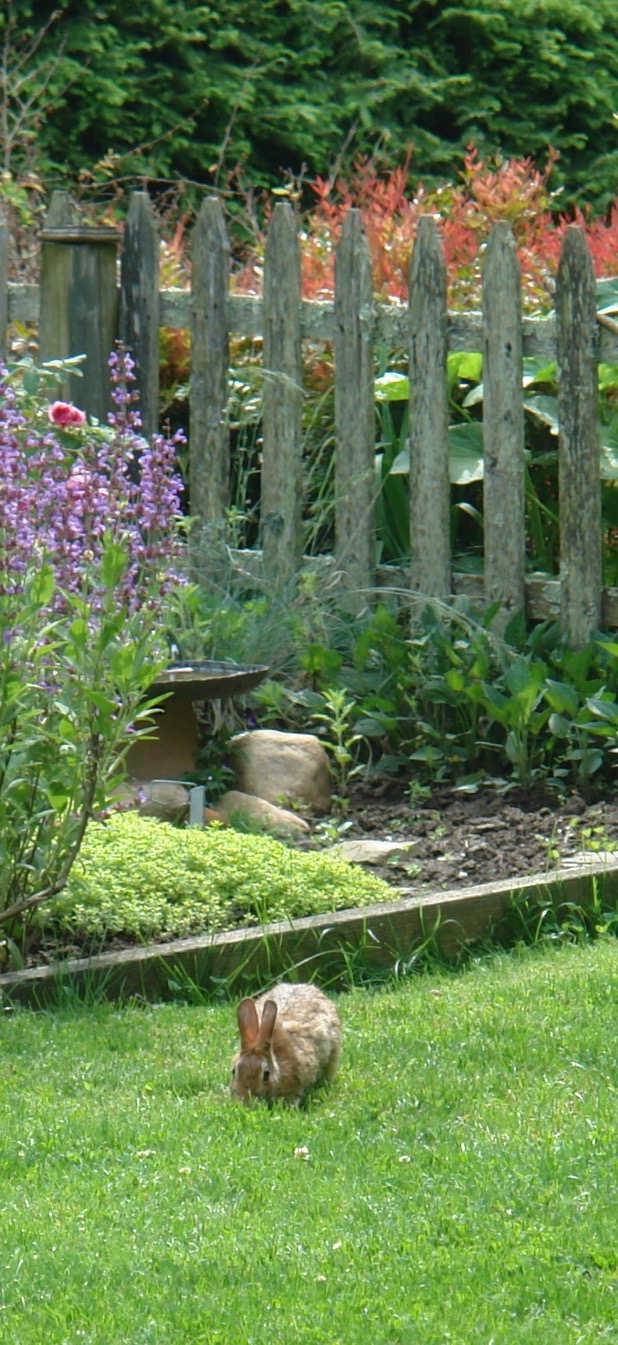
Cotton-tailed trimmer.

Mowing the yard has become an all-day event. If I remind him that the grass needs cutting, and if he’s in the mood to do it, he’ll mow front and back, come in complaining how hot he is, take a shower, then go back outside and start to mow all over again. When I catch him to tell him he already mowed, he argues. I point out the freshly manicured lawn, but he doesn’t believe me. He is hot though, so he showers again, and tries to mow a third time.

Or not.

A week ago I couldn’t get him to cut the lawn at all. When the grass was nearly at mid-calf, I threatened. He mowed the outer edges of each section, but left the middles. He put the mower away. I asked him to finish mowing. He would not. Suddenly, he went out and started the mower. He was going round and round the front when it started raining. Blinding sheets of rain. He would not stop. He kept going and going and going, an Energizer bunny. He was drenched. “No reason to quit once I got so wet,” he said with a silly smile when he came in the back door.

He headed upstairs to take another shower.


2016 National Society of Newspaper Columnists’ contest finalist. 


‘When life gets you down … just keep swimming!’

Dory, the brilliant blue, wide-eyed tang fish who stars in “Finding Dory,” has a problem with memory loss much like my husband does. I’d forgotten that Dory was a supporting player in “Finding Nemo” (2003), so I didn’t realize forgetfulness was key to the storyline for the new movie when Leslie took us to see it.

Peter didn’t remember Nemo at all, even though we saw the movie in a theater and have watched the video several times. Nor did he remember “Finding Dory” on the Thursday after he’d seen it on Sunday. But he liked it all over again.

Dory, who hasn’t seen her parents in years, remembers the importance of family, but little else. We just enjoyed a week with family that was filled with raucous laughter and good food. Peter hasn’t forgotten the good times we’ve all had in the past, though specific memories have faded. He can’t even remember much about the past eight days.

Screen Shot 2016-07-10 at 5.17.39 PMAnytime either of is down in the dumps, I look for reasons to laugh. According to Dory, swimming would help too…if Peter knew how to swim. He can’t even float, except two feet below the surface. That’s always makes me laugh, though he doesn’t think it’s funny at all

Credit: Disney•Pixar “Finding Dory” (2016)

2016 National Society of Newspaper Columnists’ contest finalist. 


A last hurrah?

“Where have you been?” Peter asked. It was the wee hours of Monday morning and he was just getting into bed.

“Los Angeles…I just got back,” I said. “The plane was late.”

“Why were you there?”

“Columnists’ conference, remember? I marked it on the big calendar downstairs.”

“Hm-m,” he muttered and, lights out, he was asleep. So much for a welcome home hurrah.

Leslie had been in charge my four days away. She (and Carolynn, too) can handle Peter, often more easily than I can. She’d been asleep on the couch and went home as soon as I came in.

When Peter came downstairs next morning, I said, “Gooood morning,” as I do every day.

He affected his fake startled look, as he always does, and said, “Oh, hello…I thought you were away.”

“I came back…two o’clock this morning,”

“Where were you?”

“L.A.” I said, pointing to the calendar on the kitchen counter.

“Mm-m, that was a long time ago. I don’t remember.” The previous Thursday was ancient history in Peter’s mind

I didn’t expect him to remember, but still it rankled. “It was one of the most exciting things I’ve ever done,” I said. I wanted to tell him about it, but showed him photos on my phone instead.

“I’m sorry, there’s just nothing in my head anymore.” He sighed and knocked on his forehead with his fist.

“But it doesn’t sound hollow,” I said and we laughed.

I didn’t even try to tell him that I’d won the number two spot in my category. Or that the award came with two hundred dollars or that I sat next to my idol Leonard Pitts at dinner.

IMG_3374When I showed him this photo of Los Angeles’ infamous rush hour traffic, he asked, “Who would want to face that every day?”

“Not me,” I said. “Coming downstairs is as far as I want to travel to go to work.”


Header photo: Mid-night rose.

2016 National Society of Newspaper Columnists’ contest finalist. 

Dementia moment.

Everything that could go wrong did go wrong these past several weeks. From our backed-up sewer pipe that breached the basement, to new stove installation that was a disaster start to finish, to Peter’s emergency eye problem, an infuriating parking ticket, and a television on the blink for five days.

The latter was the worst of it, in a way. Television is my husband’s friend. He’ll watch almost anything and lots of it.

This morning, when the technician departed after sorting our t.v. problems and the plumber left after he attached, properly, the gas line to my new range, Peter’s unsolicited hug was a welcome surprise.

“Sorry I’m no use to you anymore,” he said. I hadn’t realized he understood my frustrations dealing with all our problems on my own.

I hugged him back. “I’m sorry too,” I said. “But look, you’re here. That’s good use of you!”

He smiled and gave me another squeeze. It was moment I’ll remember, even if he won’t.

IMG_2705
Photos: Not fade away by Rachel B. Hayes, 2015. Site-specific installation at The  Taubman Museum of Art, Roanoke, Virginia, through 11/6/16.

2016 National Society of Newspaper Columnists’ contest finalist. 

The right eye had it.

As weeks go, last week was awful. Monday our sewer line backed up into the basement. And we had guests. I’m sure they were glad to leave Tuesday.

Things continued downhill — thank me for not sharing details. By Friday, I was knackered. I took Nobby to the vet at three o’clock, and promised myself I would relax afterwards with a cup of tea and the book I’d been trying to finish. Never happened.

Leslie called to ask if we wanted to meet for dinner then go to “My name is Doris.” Yes! Just what I needed. A meal I didn’t have to cook and a few laughs.

I encouraged Peter to take Nobby for a quick walk, while I made myself presentable. But before the leash was fastened, Peter came upstairs covering his right eye with his hand and a handkerchief. “Something in my eye… hurts…geez!”  It was watering and red, but I couldn’t see anything. I suspected he’d scratched his cornea. From experience, I knew how it hurt. A warm water rinse didn’t help, nor did the drops I had on hand. I took him to “speedy” urgent care, and let Leslie know we wouldn’t join them.

Start to finish, we were there more than two hours, the final fifteen minutes of which my husband charmed both nurse and doctor. He was his chatty best, happy to have a new audience.

“Where are you from?” the doctor asked.

Oh, heavens, I begged silently, give her a straight answer. After mulling his usual responses he said, “Hammersmith.” Different from his usual, “Oi’m from London, int-eye?” He added, “‘Burrah’ [borough] of London,”

She laughed. “That’s what I thought.” She told him she’d been to England several times and loved it. “I probably like Scotland even more though,” she added.

“Ooo, caw, they tauk funny up there,” he said.

The nurse took over when the doctor left the room, then we were free to leave. “Cheerio,” the doctor called as we headed down the hall.

Peter embellished his “Cheerio” with a Dick VanDyke double-hop-skip out the door. What could we do but laugh?

Screen Shot 2016-05-02 at 5.25.55 PM
Saturday morning, he had just gotten up when I returned from my walk. His eye was puffy, weepy. “How does it feel this morning?” I asked.

Confusion spread across his face in italics. “How does what feel?”

“Your eye! Don’t you remember how it hurt last evening…we went to the clinic…didn’t have any dinner?” If anything, he’d remember not eating.

“I can’t remember anything, you know that,” he said.

Sometimes, I suppose, there are advantages to having dementia.

Header photo: Peter on our trip to Alaska, 2006

2016 National Society of Newspaper Columnists’ contest finalist. 

Call a spade a spade.

From Sally Hepworth’s touching, witty, insightful, heartbreaking novel, The things we keep, these two paragraphs jumped off page 21 and imprinted themselves on my brain and on my heart:

Dr. Brain once told me that an Alzheimer’s brain was like the snow on a mountain peak—slowly melting. There are days when the sun is bright and chunks drop off all over the place, and there are days when the sun stays tucked behind clouds and everything remains largely intact. Then there are days — spectacular days (his words) — when you stumble across a trail you thought was gone forever.

“I get the feeling that since the analogy involved the words “mountain peak” and “spectacular,” Dr. Brain thought this news wouldn’t be depressing to hear, when in fact, the opposite was true.  I think I’d have felt better about my prognosis [Anna is 38 and has early-onset Alzheimer’s] if he’d reworded a little. Something like, The brain is like a filthy, stinking pile of crap. When the sun comes out, it stinks worse than you can imagine, and when it’s cold or cloudy, you can barely smell it at all. Then there are the days that, if the wind is coming from a certain way, you might catch the cold scent of a spruce for a few hours and forget the crap is even there. With that analogy, at least we’d have been calling a spade a spade. Because the truth is, if you have dementia, your brain is crap. And even if you can’t smell it right this minute, it still stinks.”

Graeme Simsion, The New York Times bestselling author of The Rosie Project, praised The Things We Keep, with these words: “A compelling read that touches on important themes, not least the different forms that love may take.”

TTWK Cover

The things we keep is a book to read and read again. Both funny and sad, it’s a page-turner I raced through, but a book that I didn’t want to end. I don’t know if Hepworth has first-hand knowledge of Alzheimer’s or if she just has a brilliant imagination. Whatever, she has captured what I think I see happening in my husband as the disease increases its grip.  And, yes, it stinks.

Screen shot 2015-05-20 at 5.30.52 PM

The things we keep, Sally Hepworth, pp. 21, St. Martin’s Press ©2015

Header photo: Violas overrun my flower beds.

2016 National Society of Newspaper Columnists’ contest finalist. 

His sneezes, like his questions, are repetitive.

Hiccups every few minutes for several days predict a bad head cold for my husband. Sure enough, a weekend of hiccups were followed on Monday by a cacophonous, multi-sneeze cold. I started force-feeding orange juice, more cups of tea than are usual for him, and a potion a friend recommended.

Every time I approached, spoon in hand, Peter said, “What’s that for?”

“Your cold,” I answered again and again.

“Do I have a cold?” he croaked between sneezes.

“Yes,” I said, over and over. “Mmm-m.”

Tuesday, when I asked if he felt well enough to go on the usual Nobby-the-therapy-dog visit to the adult day care facility, he asked if he’d been sick. Then he sneezed and sneezed and sneezed. I cancelled.

Same again this morning. A nursing home visit was scheduled for Nobby. “How do you feel?” I asked. Peter patted himself all over and said, as he always does, “I feel fine.” He sounded worse than Louis Armstrong on a good day. I cancelled the visit.

imagesimages-2There are so many horrible diseases humans contend with, but often it’s the common cold that makes us the grumpiest. Dementia is a bit like Kleenex – it wipes away the last sniffle, the dripping nose, the streaming eyes. The cold is still contagious, but dementia in all its guises, is not — and that’s a good thing.

My husband isn’t grumpy when he has a cold, he’s sneezy. But when I catch his colds, lookout, I’m grumpy.


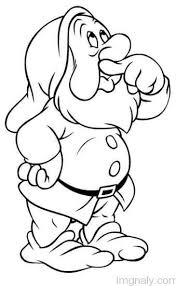
Sneezy and Grumpy sketches: “Snow White and the Seven Dwarfs,” ©Walt Disney Studios, 1937

Header photo: A sneeze magnified.

2016 National Society of Newspaper Columnists’ contest finalist. 

Random thoughts, not remembered.

Peter has trouble expressing himself more and more frequently. The other evening he was trying to explain something, but his words were jumbled. I leaned closer hoping I could catch a few words and make sense of them. Instead, he smacked himself on the head and said, “My thoughts just won’t stay in one place long enough for me to remember what I’m trying to say.”

We both laughed, but that in itself was quite a mouthful for him these days.

APHASIA (uhfey-zhuh) noun, Pathology.
The loss of a previously held ability to speak or understand
spoken or written language, due to disease or injury of the brain.

It’s so difficult for those of us whose thoughts do stay in one place to imagine what it would be like to have some form of dementia. Peter falls back on his sense of humor to get by, and I borrow on that a lot. At times, though, it’s exhausting, probably as much for him as it is for me.

Screen Shot 2015-09-22 at 2.56.34 PM

©Dan Murphy cartoon, 6/18/95

Later Peter asked, “Did you know me before my mind got like this,” he waggled his hands above his head, “before my bike accident?”

“Of course I did, silly,” I answered. “That was in 1980. We met in 1974. Besides, your mind didn’t get ‘like this’ until a few years ago. ‘”

“How do you remember all that?”

“‘Elephant brain’,” I joked. “Important stuff. How could I forget?”

“I did,” he said sadly.

Header photo: web grab

2016 National Society of Newspaper Columnists’ contest finalist.